




Autologous Platelet-Rich Plasma (PRP)
- Best for: Specific cases assessed at consultation
- Downtime: Autologous preparation derived from your own platelets, administered by injection
- Lasts: Predominantly preclinical evidence (laboratory and animal studies); not equivalent to established efficacy in humans
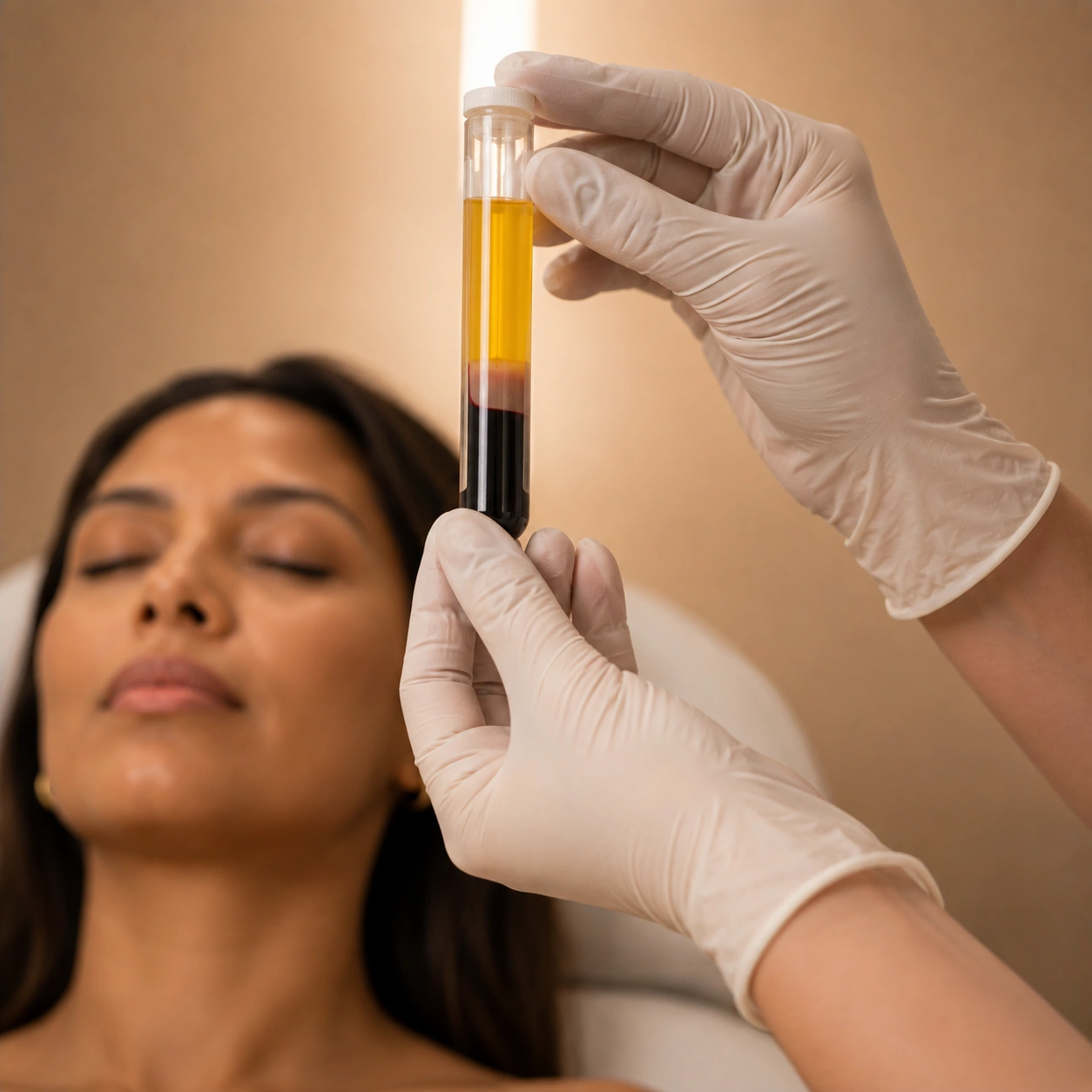
PRP is prepared from a small sample of your own blood. After the blood is drawn, usually from the arm in the same way as a routine blood test, it is placed in a centrifuge, which separates its components by spinning. The platelet-rich layer is then drawn off and injected, typically under ultrasound guidance, into the joint or soft tissue area being treated.
Platelets carry a range of growth factors involved in normal tissue healing, and the underlying idea behind PRP is to deliver a concentrated dose of these signalling proteins directly to the area of concern. Published systematic reviews have investigated PRP as an adjunctive option for chronic tendinopathies, including lateral epicondylitis (“tennis elbow”), patellar tendinopathy, and Achilles tendinopathy, alongside guided rehabilitation, with outcomes that vary between studies. For lateral epicondylitis specifically, several systematic reviews report meaningful pain and functional improvement, particularly at longer follow-up. For Achilles tendinopathy, results are mixed: observational studies suggest functional improvement, while higher-quality randomised trials are less consistent in supporting a significant benefit over loading rehabilitation alone.
For intra-articular PRP in mild-to-moderate knee osteoarthritis, published systematic reviews and meta-analyses report symptomatic improvement in pain and function for some patient groups, with effects observed at 6 and 12 months in some analyses; other reviews conclude that the effect on pain and function is weak and the clinical relevance is debatable. The studied effect is on symptoms rather than on the underlying structural disease. The UK National Institute for Health and Care Excellence (NICE) has issued specific guidance on PRP injections for knee osteoarthritis, concluding that current evidence raises no major safety concerns but that evidence on efficacy is limited in quality, and that the procedure should only be used with special arrangements for clinical governance, consent, and audit or research.
Because PRP is autologous (made from your own blood), it carries the safety profile of an autologous biological injection rather than that of a manufactured medicine. The clinic uses PRP as one option within a wider care plan that should usually include a confirmed diagnosis, guided rehabilitation, and any appropriate medical management. A typical course involves a small number of sessions, with specific protocol decisions made at consultation.
See full treatment page: PRP (Platelet-Rich Plasma)