



Dr Bhavin Garara
HomeContact UsUHai — Analyse My Skin
Smile Lines and Folds

Smile Lines and Folds

Smile lines and folds — clinically the nasolabial folds — are the creases that run from the sides of the nose down to the corners of the mouth. They are a normal feature of an expressive, mobile face. They become more pronounced when mid-face fat descends and the skin’s structural proteins decline. Effective treatment is usually structural — restoring the support in the cheek above the fold — rather than placing filler directly into the fold itself, which often produces a heavier look.

Medically reviewed by Dr Bhavin Garara, GMC 7155707 · Last reviewed: 17 April 2026

What it is

What Are Smile Lines and Folds?

Book a Consultation

The nasolabial fold is the natural anatomical boundary between the cheek and the upper lip. Every face has one; the question is how prominent it is at rest. When the mid-face is well-supported, the fold is a soft transition. When the cheek fat pad descends and the skin loses elasticity, the fold deepens and casts a shadow across the lower face — present even when the face is at rest.

Dr Bhavin Garara’s approach is structural and foundational: support the cheek above the fold so the tissue is lifted into a more youthful position, then treat the surrounding skin quality. The clinic does not generally fill the fold directly because filler placed there tends to make the lower face look heavier.

Side by side

Dynamic vs Static

Dynamic smile lines

Dynamic smile lines form only when you smile or laugh. They are an essential part of natural expression and are not treated.

Static nasolabial folds

Static nasolabial folds remain visible at rest. They are the appropriate target for treatment.

The clinic does not aim to eliminate dynamic smile lines — that would change how you express joy. The goal is to soften the static fold while preserving your full smile.

What causes it

What Causes Nasolabial Folds?

  1. 1

    Mid-face fat descent

    The malar fat pad sits high on the cheekbone in youth. With age, it loses volume and slides downward, accumulating against the fixed ligament that runs along the nasolabial line. The fold deepens because tissue piles against it.

  2. 2

    Bone resorption

    The maxilla (cheekbone) gradually loses volume over decades, reducing the bony support that holds the overlying fat pad in position.

  3. 3

    Collagen and elastin decline

    Loss of structural proteins in the dermis allows the skin to drape rather than supporting the soft tissue above the fold.

  4. 4

    Repeated expression

    The skin folds at the nasolabial line every time you smile or speak; over years, the repeated folding deepens the static crease.

  5. 5

    UV damage, smoking, lifestyle

    Photoageing accelerates collagen breakdown; smoking and chronic dehydration reduce skin quality further.

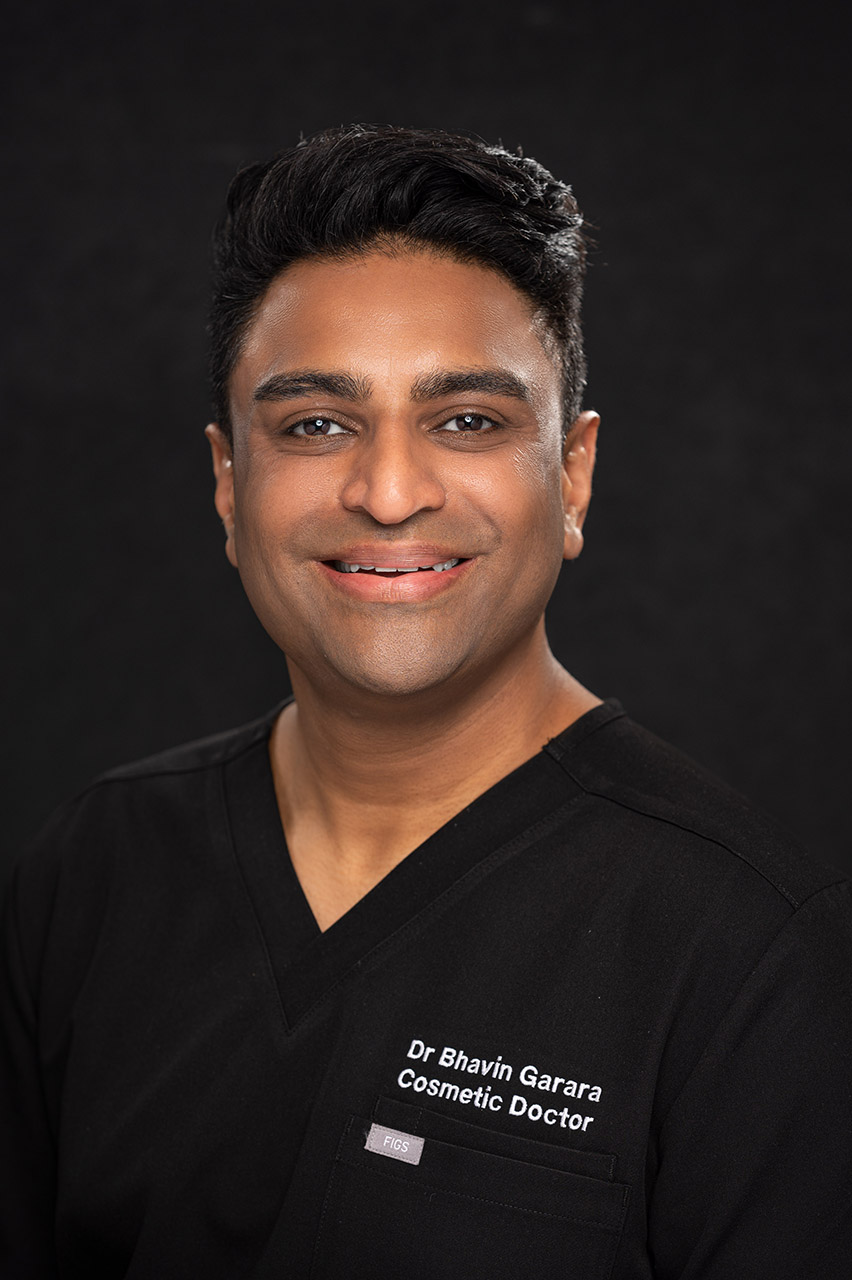
Dr Bhavin Garara
Dr Bhavin Garara, MBBS, BMedSci, PGDip
Book a Consultation
Dr Garara's approach

How Dr Bhavin Garara Treats Smile Lines

The plan usually leads with mid-face support placed on the cheekbone — not in the fold — then layers in skin-quality treatments and tightening as needed.

At the clinics in London, Dr Garara assesses at consultation the position and volume of the cheek fat pad, the projection of the cheekbone, the depth and pattern of the static fold, the elasticity of the surrounding skin, and how the nasolabial folds relate to the rest of the lower face.

  • Anatomy-led assessmentTreatment plans built around your unique facial structure and movement.
  • Personalised planCombinations chosen for your skin, goals, and lifestyle — not a one-size-fits-all protocol.
  • Natural resultsA refreshed, well-rested version of you — never a frozen or over-treated look.

Features

Treatment Options for Smile Lines

Structural support first, then skin quality and tightening. Direct fold filler is used rarely and very selectively.

Mid-face structural support (the foundation)

Mid-face structural support (the foundation)

Rebuild support over the cheekbone with HA filler (reversible) or collagen biostimulators (PLLA / CaHA, building collagen over months).

Seffiller — autologous regenerative (selective)

Seffiller — autologous regenerative (selective)

The clinic’s autologous fat-grafting treatment, used selectively where there is significant mid-face volume loss.

Regenerative skin treatments

Regenerative skin treatments

Polynucleotides (e.g. Rejuran®), PDRN, multi-ingredient skinboosters (Profhilo, Sunekos, NCTF, klardie), and autologous PRP / platelet-derived exosomes — supporting the surrounding skin.

Radiofrequency microneedling and laser

Radiofrequency microneedling and laser

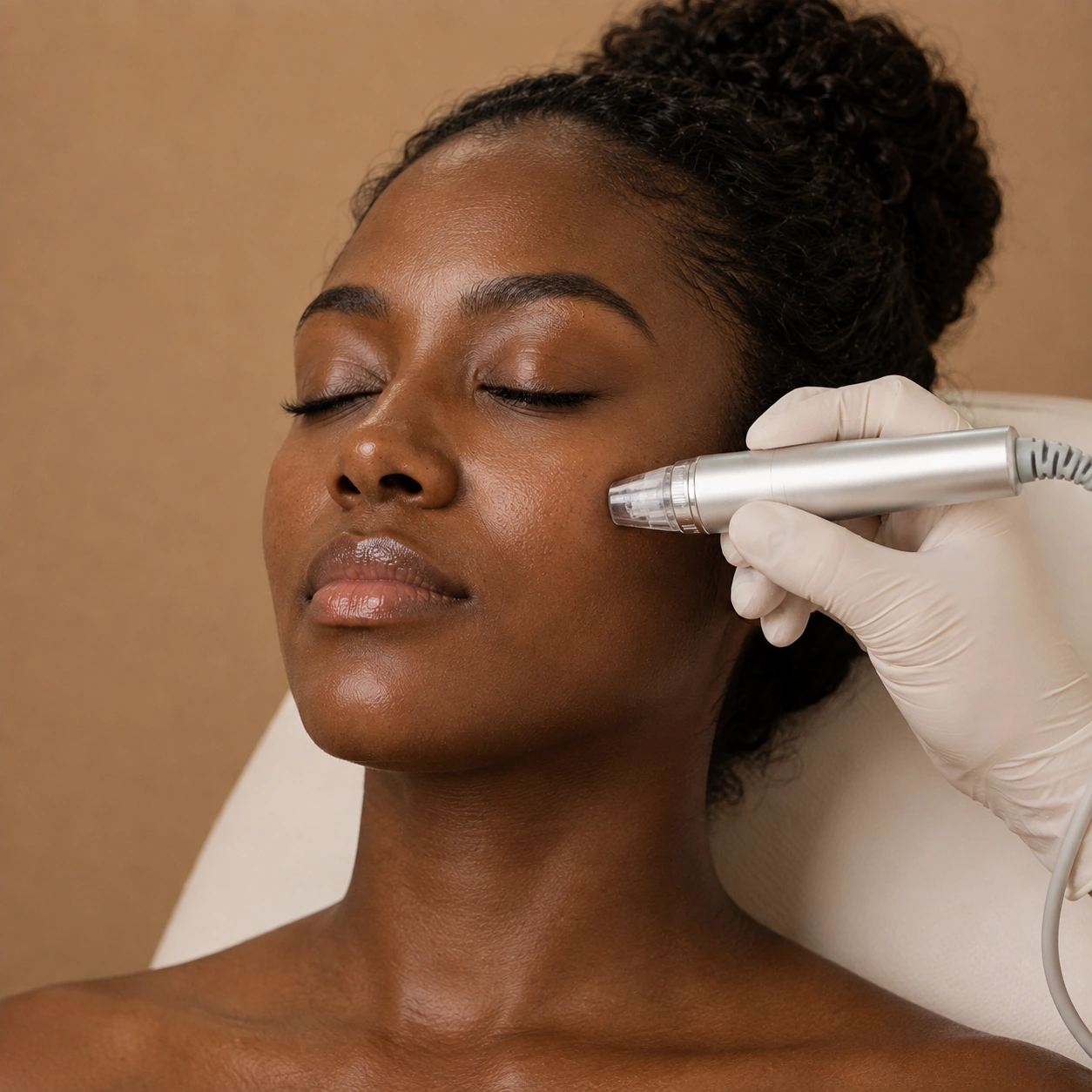
Sylfirm X for tightening; MultiFrax and UltraClear for surface refinement. Device choice and settings are tailored for skin type.

See SkinPen microneedling
Direct fold filler (very selective)

Direct fold filler (very selective)

Rarely used — small amounts of soft HA into a residual deep fold only after adequate mid-face support is in place.

We approach smile lines structurally — restoring support in the cheek above the fold — then layer in skin-quality and tightening treatments as needed. Filler placed directly into the fold is used sparingly because it tends to make the lower face look heavier.

Mid-face structural support (the foundation)

  • Best for: Folds caused by mid-face volume loss
  • Downtime: 1–4 days of swelling
  • Lasts: Around 12–18 months

The first move is usually to rebuild support over the cheekbone. Options:

  • Hyaluronic acid (HA) filler placed deep on the bone using a cannula — reversible with hyaluronidase if needed.
  • Collagen biostimulators — PLLA or CaHA preparations including HA + CaHA hybrids — building collagen over weeks and months.

Hyaluronic acid filler is reversible. See our filler removal and dissolving page.

Seffiller — autologous regenerative (selective)

  • Best for: Selected patients with significant volume loss
  • Downtime: 5–10 days of swelling
  • Lasts: Variable — a proportion integrates and lasts; results vary

For selected patients with significant volume loss, Seffiller — the clinic’s autologous fat-grafting treatment — uses the patient’s own tissue to rebuild mid-face support. A proportion of the transferred fat integrates and provides long-lasting volume; results vary between individuals.

Regenerative skin treatments

  • Best for: Thin perioral skin and superficial crease
  • Downtime: 1–2 days of mild bumps
  • Lasts: Around 6–12 months with a course

For the surrounding skin, polynucleotides (PN) such as Rejuran®, PDRN, multi-ingredient skinboosters (Profhilo, Sunekos, NCTF, klardie), and autologous PRP / platelet-derived exosomes improve skin quality, elasticity, and resilience over a course.

Radiofrequency microneedling and laser

  • Best for: Skin laxity and textural change within or around the fold
  • Downtime: 2–7 days depending on device
  • Lasts: Long-lasting; collagen remodelling continues for months

Sylfirm X delivers radiofrequency to tighten and remodel the mid-face skin. MultiFrax and UltraClear lasers can refine surface texture within the fold itself. Treatment for higher Fitzpatrick skin types (IV–VI) requires careful device selection and conservative settings to reduce the risk of post-inflammatory hyperpigmentation or, in some cases, keloid scarring. Dr Garara has particular experience in aesthetic medicine for skin of colour and tailors device choice, energy levels, and treatment intervals accordingly.

Direct fold filler (very selective)

  • Best for: Residual deep static fold after structural support
  • Downtime: 1–3 days of swelling
  • Lasts: Around 9–12 months

In specific cases — usually patients who have first had adequate mid-face support and still have a residual deep static fold — very small amounts of soft HA placed within the fold can complete the result. This is used rarely and selectively; the lower-face filler trap is to over-fill the fold and produce a heavier look.

Considering treatment for smile lines?

Book a consultation with Dr Bhavin Garara.

Book a Consultation
Compare at a glance

Treatments at a Glance

Mid-face HA filler (structural lift)

Best suited for
Folds caused by mid-face volume loss
Typical downtime
1–4 days of swelling
How long results last
Around 12–18 months
What it does
Lifts the cheek so the fold is supported from above

Collagen biostimulators (PLLA / CaHA)

Best suited for
Gradual rebuilding of mid-face support
Typical downtime
1–3 days of swelling
How long results last
Around 12–18 months following a course
What it does
Builds new collagen over months

Seffiller (autologous)

Best suited for
Selected patients with significant volume loss
Typical downtime
5–10 days of swelling
How long results last
Variable — a proportion integrates and lasts; results vary
What it does
Restores volume using the patient’s own tissue

Regenerative skin treatments

Best suited for
Thin perioral skin and superficial crease
Typical downtime
1–2 days of mild bumps
How long results last
Around 6–12 months with a course
What it does
Supports skin quality and elasticity

Radiofrequency microneedling and laser

Best suited for
Skin laxity and textural change within or around the fold
Typical downtime
2–7 days depending on device
How long results last
Long-lasting; collagen remodelling continues for months
What it does
Tightens, remodels, and resurfaces

Direct fold HA (very selective)

Best suited for
Residual deep static fold after structural support
Typical downtime
1–3 days of swelling
How long results last
Around 9–12 months
What it does
Softens a residual line — used sparingly

Downtime and duration figures are typical averages only. Individual results vary considerably. Dr Garara will give you a more personalised picture at consultation.

Safety & risk

Is Smile Line Treatment Safe?

The mid-face and nasolabial region are supplied by branches of the facial artery, including the angular artery near the nose, which carries a small but recognised risk of vascular complications when injection is placed in this area. In rare cases vascular events can affect more distant areas, including the eye via anastomoses with the ophthalmic system. The nasolabial region is on the recognised list of explicit higher-risk areas.

We share this not to alarm you, but because patients deserve full information. The area should only be treated by an experienced medical practitioner who understands the anatomy and is equipped to manage complications — including the immediate availability of hyaluronidase to reverse hyaluronic acid filler. Dr Garara is always happy to discuss the specific risks of any treatment at consultation.
  • Qualified medical practitionerTreatment carried out by an experienced doctor with detailed anatomical training.
  • Reversal agents on handHyaluronidase and other complication-management tools are immediately available.
  • Full informed consentRisks, alternatives, and expected outcomes discussed in detail before any treatment.
Dr Bhavin Garara
Reviewed byDr Bhavin Garara

Frequently Asked Questions

Common questions about smile line and nasolabial fold treatments.

Read next

Related Concerns

Smile lines connect to many lower-face concerns. You may also want to read about:

← All face concerns

For an overview of all the facial concerns we treat, visit our Face treatments hub.

Next step

Ready to take the next step?

Book a consultation with Dr Bhavin Garara.

Book a Consultation

Begin with a proper assessment.

Tell us a little about what you're looking for and we'll match you with the right consultation — at the clinic or virtually.

  • Your enquiry goes directly to Dr Bhavin's team.
  • We'll be in touch within one working day.
  • All consultations are strictly confidential.

This page is for general information and does not constitute medical advice. All treatments require a personal consultation. Suitability, risks, and expected outcomes will be discussed with you in detail before any treatment is carried out.