




Dr Bhavin Garara
HomeContact UsUHai — Analyse My Skin
Wide Jaw

Wide Jaw

A wide or square-looking lower face is, for most people, caused by enlargement of the masseter — the main chewing muscle that sits at the angle of the jaw, just below and in front of the ear. Often this is driven by nighttime teeth grinding or chronic jaw clenching, which exercises the muscle and gradually thickens it. Carefully placed micro-doses of muscle-relaxing injections allow the masseter to gradually slim over weeks, softening the lower-face contour and — for many patients — easing the symptoms of bruxism at the same time.

Medically reviewed by Dr Bhavin Garara, GMC 7155707 · Last reviewed: 17 June 2026

What it is

What Is a Wide Jaw?

Book a Consultation

The width of the lower face is a combination of bone structure (the angle and shape of the mandible), soft-tissue volume (fat pads and skin), and muscle bulk — most importantly the masseter, which spans from the cheekbone down to the angle of the jaw and is one of the strongest muscles in the body. The masseter responds to use like any other muscle: heavy, repeated use makes it thicker.

For some people the jaw width is mainly skeletal — it is simply the shape of the underlying bone. For others, particularly people who clench or grind their teeth, the masseter has developed beyond what their bone structure alone would produce. The first job at consultation is to work out which is which.

Dr Bhavin Garara’s approach to a wide jaw is functional as well as aesthetic. Masseter reduction with carefully dosed muscle-relaxing injections does two things: it gradually slims the muscle, and it eases the over-active clench-and-grind pattern that often comes with bruxism — which many patients find as valuable as the visual change.

What causes it

What Causes a Wide Jaw?

There are three main contributors. Most patients have a combination, and the assessment determines which is leading.

  1. 1

    Masseter hypertrophy

    The most common cause of a wide-looking jaw in adults is an enlarged masseter muscle. The muscle thickens with repeated use, in the same way any other muscle does. The triggers are usually bruxism (nighttime teeth grinding, often unconscious, and often linked to stress, anxiety, or sleep disturbance), daytime clenching (a habit many people are unaware of, particularly during periods of focus or stress), and chewing-pattern habits (heavy use of chewing gum, frequent hard or tough foods, or a strongly developed bite from early life). Hypertrophy is the cause most amenable to non-surgical treatment.

  2. 2

    Skeletal jaw shape

    Some people have a naturally wide or square mandibular angle — a feature of their bone structure rather than soft tissue. Non-surgical treatments cannot change bone, but the soft-tissue contour over it can sometimes be softened by reducing any muscle component or supporting the mid-face above.

  3. 3

    Lower-face fat

    In some patients, additional fullness in the lower face is partly soft-tissue / fat distribution. We do not offer injectable fat-dissolving treatments in this area (they are not on our treatment menu); where the issue is genuinely fat rather than muscle, a different specialist pathway may be appropriate.

Dr Bhavin Garara
Dr Bhavin Garara, MBBS, BMedSci, PGDip
Book a Consultation
Dr Garara's approach

How Dr Bhavin Garara Treats Wide Jaw

A successful approach starts with working out which combination of factors is producing your specific shape.

At the clinics in London, Dr Garara assesses at consultation the bulk and tone of your masseter muscle when you clench, the shape of the underlying mandible at rest, the contribution of any soft-tissue volume, any symptoms or history that suggest bruxism (morning jaw stiffness, tooth-wear pattern, headache on waking), and how the lower face relates to the rest of your face.

From this, he designs a treatment plan that usually centres on careful masseter reduction with muscle-relaxing injections — and, where appropriate, adds radiofrequency microneedling to support skin quality as the muscle slims, and considers mid-face support to balance the proportions of the face overall.

  • Anatomy-led assessmentTreatment plans built around your unique facial structure and movement.
  • Personalised planCombinations chosen for your skin, goals, and lifestyle — not a one-size-fits-all protocol.
  • Natural resultsA refreshed, well-rested version of you — never a frozen or over-treated look.

Features

Treatment Options for Wide Jaw

Masseter reduction with muscle-relaxing injections is the foundation; RF microneedling and mid-face biostimulators are added selectively.

Prescription muscle-relaxing injections (masseter reduction)

Prescription muscle-relaxing injections (masseter reduction)

Micro-doses into the bulky portion of the masseter allow it to gradually slim over 6–12 weeks, softening the lower-face contour and easing bruxism symptoms.

Radiofrequency microneedling (Sylfirm X) — supporting skin as the muscle slims

Radiofrequency microneedling (Sylfirm X) — supporting skin as the muscle slims

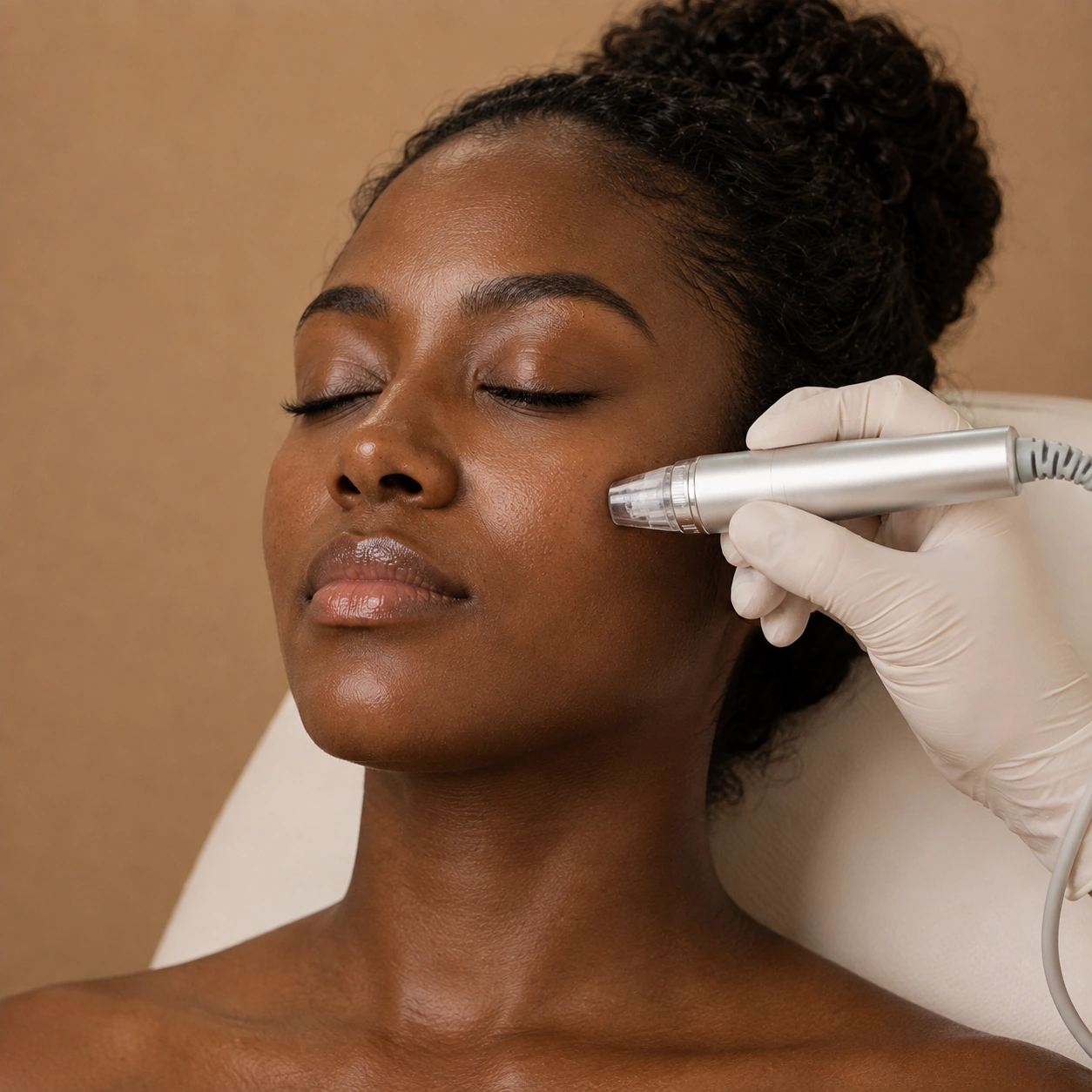
Sylfirm X delivers radiofrequency through fine needles to encourage tightening as the masseter reduces — keeping the new contour crisp.

See Sylfirm X
Mid-face support (selective)

Mid-face support (selective)

PLLA or CaHA preparations over the cheekbone balance the lower-face slimming and emphasise the natural facial contour. Used selectively, not routinely.

Treatment centres on careful masseter reduction; skin-tightening and mid-face support are layered in selectively where they suit the patient’s anatomy.

Prescription muscle-relaxing injections (masseter reduction)

  • Best for: Enlarged masseter giving a square or wide lower face; bruxism
  • Downtime: None — brief pinpoint redness
  • Lasts: Around 4–6 months, longer with regular treatment

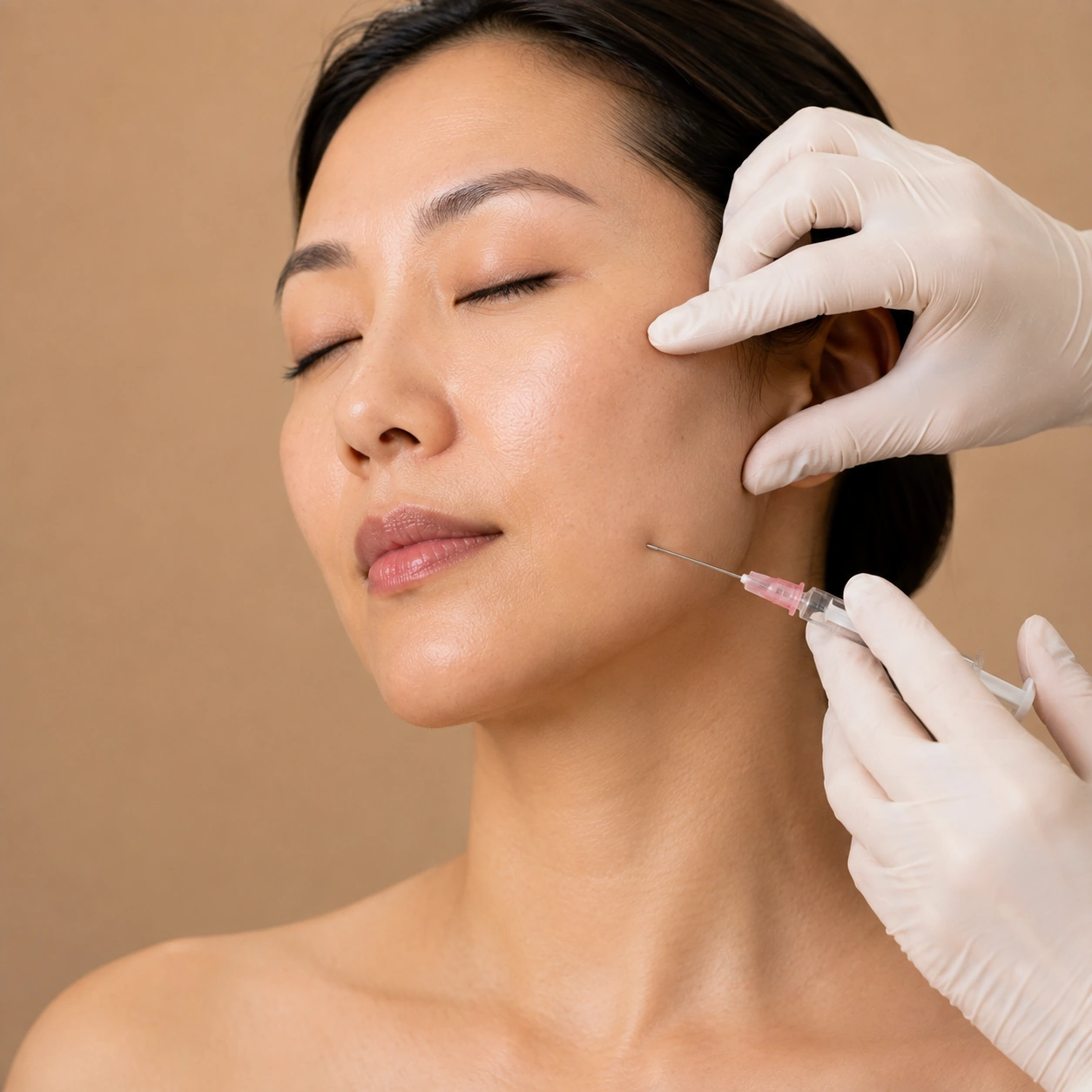
For a wide jaw caused by an enlarged masseter, the most established non-surgical option is micro-dose muscle-relaxing injections placed directly into the bulky portion of the muscle. As the muscle is no longer fully exercised, it gradually slims over about 6 to 12 weeks, softening the lower-face contour. The same treatment usually eases bruxism-related symptoms — morning jaw stiffness, headaches on waking, and ongoing tooth wear — which many patients find as valuable as the cosmetic change.

Prescription muscle-relaxing injections work by temporarily reducing the activity of specific muscles, so the skin above them stops folding with each movement. The active ingredient is botulinum toxin type A, a purified protein delivered in very small, precisely placed doses. These are prescription-only medicines in the UK, which means they can only be prescribed and administered by a qualified medical prescriber following a face-to-face consultation. Whether this treatment is suitable for you, and what specific product or dose would be used, is something Dr Garara will discuss with you at consultation. It is not suitable for everyone.

Treatment of the masseter is what’s known as “off-licence” — established, lawful practice in qualified medical hands, but not specifically licensed by UK regulators for this particular indication. Dr Garara will explain this fully at consultation, including why he considers it appropriate for your case, and will obtain your informed consent before any treatment.

A typical course is an initial treatment with a top-up 4–6 weeks later if needed, then maintenance approximately every 4–6 months — though the interval often lengthens with regular treatment as the muscle settles into a smaller resting size.

Radiofrequency microneedling (Sylfirm X) — supporting skin as the muscle slims

  • Best for: Supporting the skin envelope as the masseter slims
  • Downtime: 2–4 days of mild redness
  • Lasts: Long-lasting; collagen remodelling continues for months

When the masseter reduces in size, the overlying skin needs to adapt. In younger patients this happens naturally; in patients with reduced skin elasticity, the skin can look slightly loose for a period. Radiofrequency microneedling with Sylfirm X delivers controlled radiofrequency energy through fine needles into the dermis to encourage tightening and collagen remodelling. Used selectively as the masseter is reducing, it can support the skin envelope so the new contour looks crisp.

Treatment for higher Fitzpatrick skin types (IV–VI) requires careful device selection and conservative settings to reduce the risk of post-inflammatory hyperpigmentation or, in some cases, keloid scarring. Dr Garara has particular experience in aesthetic medicine for skin of colour and tailors device choice, energy levels, and treatment intervals accordingly.

Mid-face support (selective)

  • Best for: Balancing facial proportions with structural support over the cheekbone
  • Downtime: Mild swelling for 1–2 days
  • Lasts: Around 12–18 months following a course

For some patients, balancing the lower-face slimming with structural support in the mid-face (over the cheekbone) emphasises the natural facial contour. The two main classes used are poly-L-lactic acid (PLLA) biostimulators, which work primarily by signalling your fibroblasts to produce new collagen over a course of months, and calcium hydroxyapatite (CaHA) preparations, including hybrid HA + CaHA formulations. Specific product choice is determined at consultation. This is used selectively, not routinely.

Considering treatment for a wide jaw?

Book a consultation with Dr Bhavin Garara to discuss whether masseter reduction is the right approach for your anatomy.

Book a Consultation
Compare at a glance

Treatments at a Glance

Masseter reduction (muscle-relaxing injections)

Best suited for
Enlarged masseter giving a square or wide lower face; bruxism
Typical downtime
None — brief pinpoint redness
How long results last
Around 4–6 months, longer with regular treatment
What it does
Allows the muscle to gradually slim and eases clench/grind activity

Radiofrequency microneedling

Best suited for
Supporting the skin envelope as the masseter slims
Typical downtime
2–4 days of mild redness
How long results last
Long-lasting; collagen remodelling continues for months
What it does
Tightens and remodels the skin from within

Mid-face biostimulators (selective)

Best suited for
Balancing facial proportions with structural support over the cheekbone
Typical downtime
Mild swelling for 1–2 days
How long results last
Around 12–18 months following a course
What it does
Gradually builds new collagen to support mid-face contour

Downtime and duration figures are typical averages only. Individual results vary considerably depending on muscle bulk, skin type, age, and how your body responds. Dr Garara will give you a more personalised picture at consultation.

Safety & risk

Is Wide Jaw Treatment Safe?

Masseter reduction is widely performed and generally well tolerated. The most common, minor side effects are brief soreness or bruising at the injection sites and mild fatigue in the chewing muscles for the first week or two — most patients describe needing to chew tougher foods slightly more deliberately during this period. Rarely, the smile can be affected for a few weeks if some of the muscle-relaxing effect drifts beyond the masseter; this is reduced by careful placement and conservative dosing. The peri-jaw area is supplied by branches of the facial artery; serious vascular events with injections placed in the masseter (which sits over bone) are uncommon, but as with any injection in the face the area should only be treated by an experienced medical practitioner.

We share this not to alarm you, but because patients deserve full information. Dr Garara is always happy to discuss the specific risks of any treatment, and the safety protocols he follows, in detail at your consultation.
  • Qualified medical practitionerTreatment carried out by an experienced doctor with detailed anatomical training.
  • Reversal agents on handHyaluronidase and other complication-management tools are immediately available.
  • Full informed consentRisks, alternatives, and expected outcomes discussed in detail before any treatment.
Dr Bhavin Garara
Reviewed byDr Bhavin Garara

Frequently Asked Questions

Common questions about masseter reduction and wide jaw treatment.

Read next

Related Concerns

A wide jaw often appears alongside other lower-face concerns. You may also want to read about:

← All face concerns

For an overview of all the facial concerns we treat, visit our Face treatments hub.

Next step

Ready to take the next step?

Book a consultation with Dr Bhavin Garara for a personalised assessment and treatment plan for your jawline.

Book a Consultation

Begin with a proper assessment.

Tell us a little about what you're looking for and we'll match you with the right consultation — at the clinic or virtually.

  • Your enquiry goes directly to Dr Bhavin's team.
  • We'll be in touch within one working day.
  • All consultations are strictly confidential.

This page is for general information and does not constitute medical advice. All treatments require a personal consultation. Suitability, risks, and expected outcomes will be discussed with you in detail before any treatment is carried out.