



Dr Bhavin Garara
HomeContact UsUHai — Analyse My Skin
Frown Lines

Frown Lines

Frown lines are the vertical creases that form between the eyebrows, known medically as glabellar lines and often called “the elevens” because they typically appear as two parallel lines. They are caused by the repeated contraction of the muscles that pull the brows together, combined with the natural decline of collagen and elastin in the skin as we age. A range of treatments can soften frown lines, from prescription muscle-relaxing injections to regenerative skin treatments — and this guide explains how each one works.

Medically reviewed by Dr Bhavin Garara, GMC 7155707 · Last reviewed: 23 June 2026

What it is

What Are Frown Lines?

Book a Consultation

Frown lines — glabellar lines — are the vertical creases that develop in the glabella, the area of skin between and just above the eyebrows. You may have heard them called “the elevens” or “the 11 lines” because they often show up as two vertical lines running upwards from the inner brow.

They form from the repeated contraction of two small muscles: the corrugator supercilii, which pulls the brows inwards, and the procerus, which pulls the brow downwards at the bridge of the nose. These muscles engage every time you frown, squint into bright light, concentrate, or feel worried — usually without you noticing.

In younger skin, plentiful collagen and elastin allow these creases to spring back and disappear once the muscles relax. Over time, thousands of small contractions, combined with a gradual decline in the skin’s structural proteins, cause the lines to linger even when the face is at rest. A line you once saw only when frowning can slowly become etched into the skin. Many people find this frustrating, because deep frown lines can make them look tired, cross, or worried when they don’t feel that way at all.

Dr Bhavin Garara’s approach to frown lines is anatomy-led: soften the muscle activity where appropriate, support the quality of the skin itself, and preserve your natural expression — so you still look like you. Rather than treating the line in isolation, the aim is to regenerate and refine the skin’s own health, so the improvement looks like a rested version of your own face.

Side by side

Dynamic vs Static Frown Lines

Working out whether your frown lines are dynamic, static, or a mix of both is the first step in deciding which treatments will help, so it is worth understanding the difference.

Dynamic frown lines

Dynamic frown lines appear only when you actively contract the muscles — when you concentrate, squint in sunlight, or express concern. At rest, the skin returns to smooth. Dynamic lines are about muscle movement.

Static frown lines

Static frown lines are visible even when your face is completely relaxed. Over years of repeated folding, combined with the natural depletion of collagen and elastin, a dynamic line becomes physically etched into the skin. Static lines are about the skin itself.

This distinction matters because it points to different treatments. Addressing lines while they are still dynamic — or before they form at all — is generally easier and more effective than treating deeply established static lines. Many people have a combination of both, which is why treatment is often layered.

What causes it

What Causes Frown Lines?

Frown lines develop from several anatomical, biological, and environmental factors working together.

  1. 1

    Repeated muscular contractions

    The corrugator and procerus muscles fold the skin inwards and downwards every time you frown. Repeated over decades, this mechanical action breaks down the underlying collagen and elastin — much as a piece of paper folded in the same place again and again will eventually hold a permanent crease.

  2. 2

    Natural decline in collagen and elastin

    As we age, skin cells called fibroblasts become less active. They produce less collagen and elastin — the proteins that give skin its firmness and elasticity — and the skin’s natural hyaluronic acid also declines, so it holds less water and becomes thinner. This intrinsic ageing means the skin loses its ability to bounce back from repeated folding.

  3. 3

    UV exposure and sun damage

    Ultraviolet light is one of the most significant accelerators of skin ageing. It breaks down collagen fibres and weakens the skin’s structural support — a process called photoageing. This is why frown lines often appear earlier and look deeper in people with significant sun exposure.

  4. 4

    Lifestyle and stress

    Chronic stress can increase involuntary muscle tension, so you may be frowning subconsciously through the day or even while you sleep. Smoking, pollution, and poor sleep all generate oxidative stress that further impairs the skin’s ability to repair itself.

Dr Bhavin Garara
Dr Bhavin Garara, MBBS, BMedSci, PGDip
Book a Consultation
Dr Garara's approach

How Dr Bhavin Garara Treats Frown Lines

No two faces age in the same way, so a one-size-fits-all protocol rarely gives the most natural-looking result.

At the clinics in London, Dr Garara carries out a careful facial assessment at consultation, looking at the strength and pattern of your dynamic muscle movement, the depth of any static etching in the skin, the overall quality and thickness of the surrounding skin, and the balance of the upper face as a whole — including your natural brow position.

From there, he designs a personalised plan that may combine treatments addressing muscle movement, skin quality, and surface texture, with the aim of a refined, harmonious result rather than an obviously “treated” look. For many patients, the most effective approach to frown lines is a thoughtful combination rather than a single treatment.

  • Anatomy-led assessmentTreatment plans built around your unique facial structure and movement.
  • Personalised planCombinations chosen for your skin, goals, and lifestyle — not a one-size-fits-all protocol.
  • Natural resultsA refreshed, well-rested version of you — never a frozen or over-treated look.

Prevention

How to Prevent Frown Lines

A few habits make a meaningful difference to how quickly frown lines develop and how deep they become.

Prevention

These steps also help with related concerns such as crow’s feet and forehead lines, which share the same underlying causes.

Features

Treatment Options for Frown Lines

We use a range of treatments — some addressing muscle activity, some addressing the quality of the skin itself, and some addressing surface texture. Many patients benefit from a combination.

Prescription muscle-relaxing injections

Prescription muscle-relaxing injections

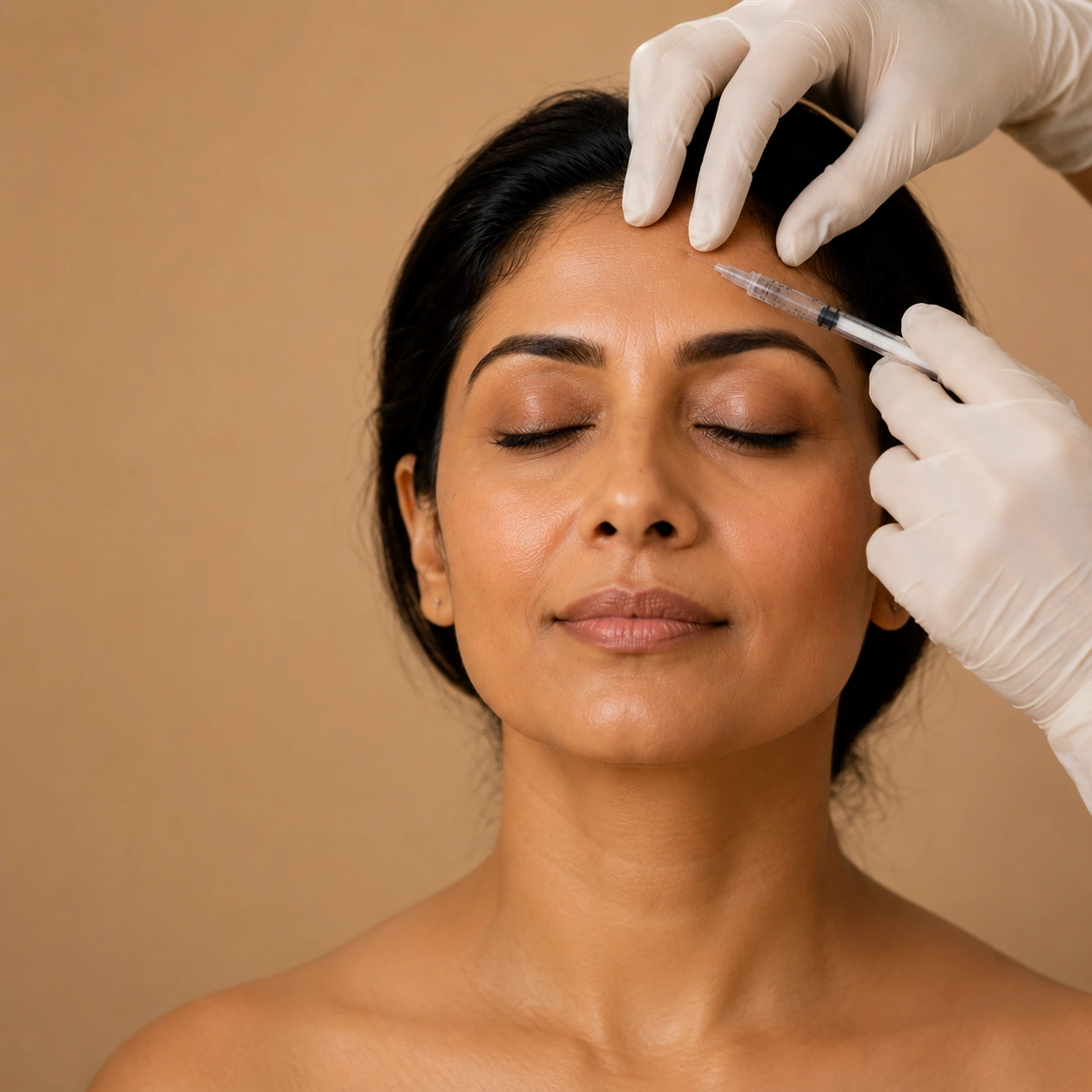
For dynamic frown lines, prescription injectables temporarily relax the corrugator and procerus muscles so the skin above stops folding.

Regenerative injectables: polynucleotides, PDRN and skinboosters

Regenerative injectables: polynucleotides, PDRN and skinboosters

Polynucleotides (e.g. Rejuran®), PDRN, and multi-ingredient skinboosters (Profhilo, Sunekos, NCTF, klardie) support skin quality where it has thinned or begun to show early static lines.

See Polynucleotides
Collagen biostimulators

Collagen biostimulators

Poly-L-lactic acid (PLLA) and calcium hydroxyapatite (CaHA) preparations gradually prompt your own skin to produce new collagen over weeks and months.

Regenerative treatment using your own blood (PRP)

Regenerative treatment using your own blood (PRP)

Platelet-Rich Plasma uses growth factors from your own blood to support skin quality in the brow area.

See PRP (Platelet-Rich Plasma)
Hyaluronic acid dermal fillers

Hyaluronic acid dermal fillers

For deeply etched static lines, HA filler can occasionally provide physical lift — but used very selectively here, because the glabella is one of the highest-risk areas for vascular complications.

Laser and energy-based devices

Laser and energy-based devices

Laser resurfacing (UltraClear, MultiFrax) and radiofrequency microneedling (Sylfirm X) resurface and remodel etched lines and surface texture.

We use a range of treatments — some addressing muscle activity, some addressing the quality of the skin itself, and some addressing surface texture. Many patients benefit from a combination. The right protocol for you depends on your individual anatomy, the depth of your lines, and your personal preferences, which is what the consultation is for.

Prescription muscle-relaxing injections

  • Best for: Dynamic lines visible with movement
  • Downtime: Minimal — brief pinpoint redness
  • Lasts: Around 3–4 months, varies between individuals

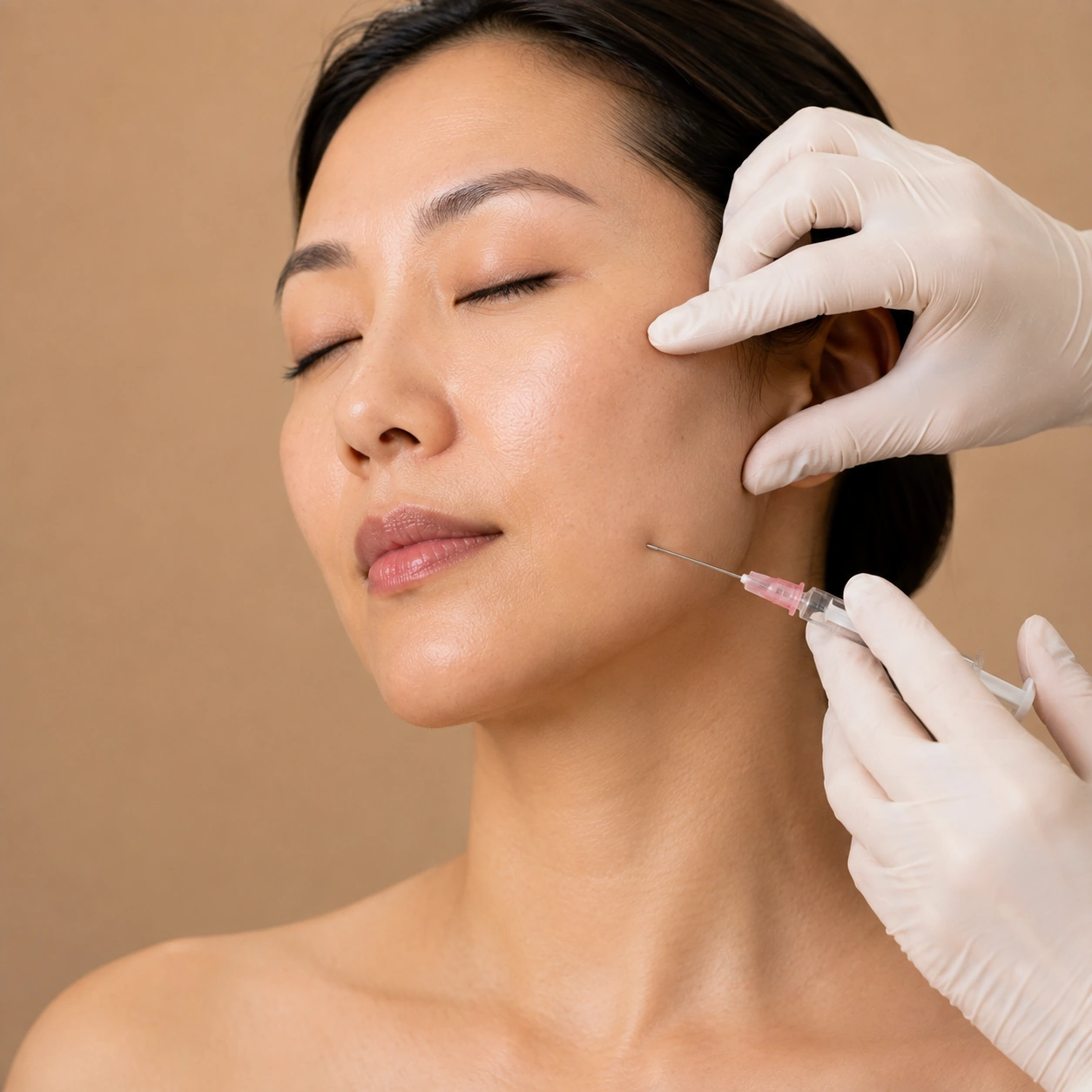
For dynamic frown lines, prescription injectables that temporarily relax the corrugator and procerus muscles are one of the most extensively studied options in aesthetic medicine. By softening the contraction of these specific muscles, the skin above stops folding with each frown, and the line gradually softens.

Prescription muscle-relaxing injections work by temporarily reducing the activity of specific muscles, so the skin above them stops folding with each movement. The active ingredient is botulinum toxin type A, a purified protein delivered in very small, precisely placed doses. These are prescription-only medicines in the UK, which means they can only be prescribed and administered by a qualified medical prescriber following a face-to-face consultation. Whether this treatment is suitable for you, and what specific product or dose would be used, is something Dr Garara will discuss with you at consultation. It is not suitable for everyone.

The glabellar (frown line) area is one of the specific indications for which botulinum toxin products hold a UK licence, making this one of the most established uses of botulinum toxin in aesthetic practice. Dr Garara uses a careful, conservative dosing approach: the aim is to soften the muscle activity enough to smooth the skin while preserving your natural expression — a well-judged treatment should leave you looking like a rested, well-slept version of yourself, never frozen.

Regenerative injectables: polynucleotides, PDRN and skinboosters

  • Best for: Thin, dehydrated skin and early static lines
  • Downtime: Small bumps for 24–48 hours
  • Lasts: Around 6–12 months with a course

Where the skin itself has become thin, dehydrated, or has begun to show early static lines, treatments aimed at improving skin quality can make a real difference. There are three related but distinct groups here.

Polynucleotides (PN) are long-chain, highly purified DNA fragments derived from wild salmon (Oncorhynchus keta). Once injected into the skin, they are understood to act as a “repair signal” — supporting your fibroblasts to produce more collagen and elastin, helping the skin hold moisture, and gradually improving its thickness and resilience. Polynucleotides are not fillers; they do not add volume. A widely-used brand example in the UK is Rejuran®, a CE-marked Class III medical device made by PharmaResearch using their patented DOT™ (DNA Optimizing Technology) process. Treatment is typically a course of three sessions about a month apart, with results commonly lasting around 6–12 months, though this varies between individuals.

PDRN (polydeoxyribonucleotide) consists of shorter DNA fragments from the same family as polynucleotides, but with a lower molecular weight. PDRN acts mainly on the skin’s repair processes — supporting cell turnover, reducing inflammation, and aiding tissue healing — which makes it well suited to skin that is irritated, recovering, or being treated alongside lasers or microneedling. Although the two are sometimes confused, polynucleotides and PDRN have meaningfully different molecular profiles and clinical roles.

Multi-ingredient skinboosters such as Profhilo, Sunekos, NCTF, and klardie deliver hyaluronic acid alongside amino acids, peptides, vitamins, and — in some formulations — DNA-derived components into the dermis, supporting hydration, the skin barrier, and overall skin quality.

These treatments typically need a short course of 2–3 sessions a few weeks apart, followed by occasional maintenance.

Collagen biostimulators

  • Best for: Skin laxity and loss of structural support
  • Downtime: Mild swelling for 1–2 days
  • Lasts: Around 12–18 months following a course

For more established skin laxity around the brow area, collagen biostimulators encourage your own skin to produce new collagen gradually over weeks and months, which is why their results tend to look very natural. The two main classes used at the clinic are poly-L-lactic acid (PLLA) biostimulators, which work primarily by signalling your fibroblasts to produce new collagen over a course of months, and calcium hydroxyapatite (CaHA) preparations — including hybrid formulations that combine hyaluronic acid with CaHA to give both immediate volume and a gradual biostimulatory effect. Specific product choice is determined at consultation, based on what suits your skin and the area being treated.

Regenerative treatment using your own blood (PRP)

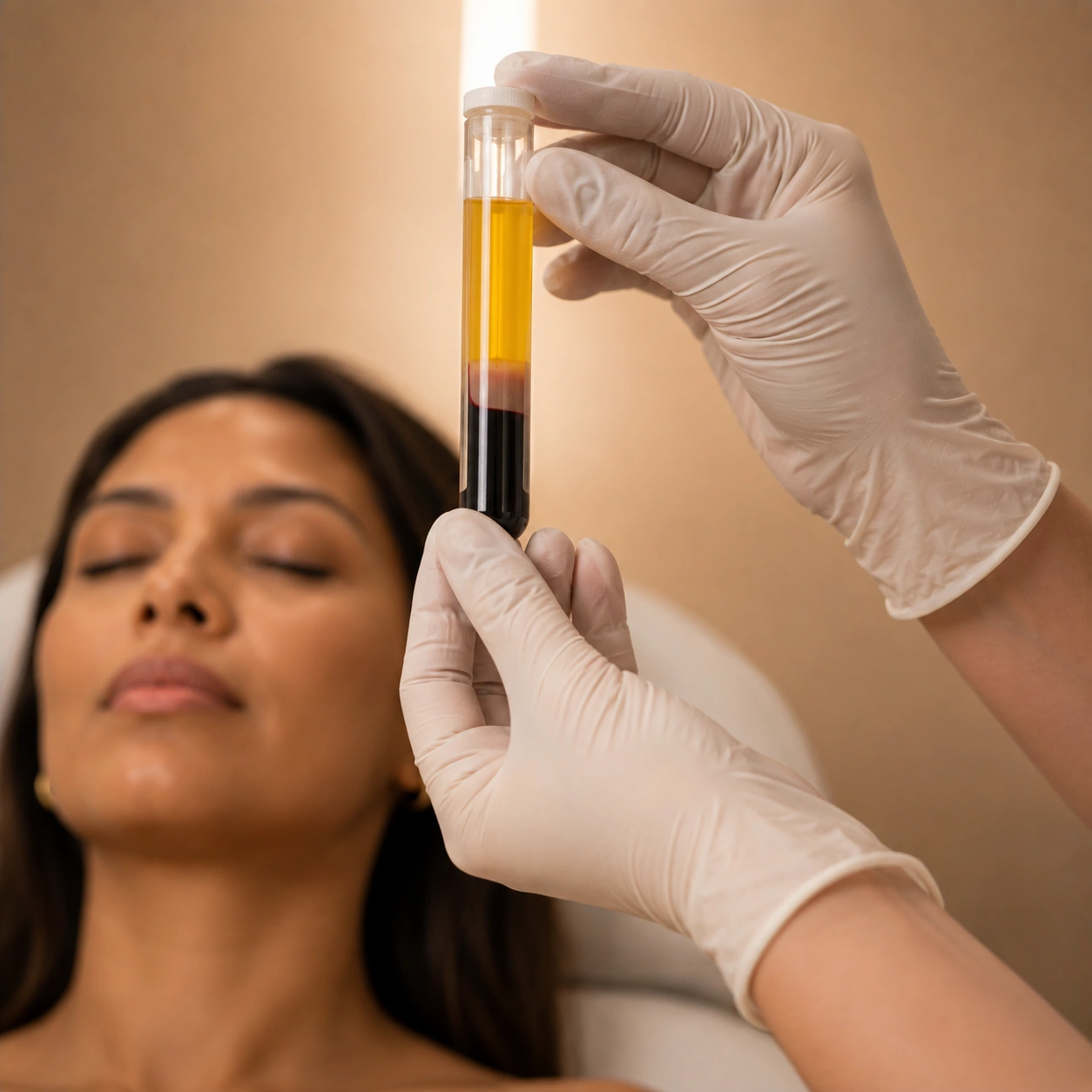
Platelet-Rich Plasma (PRP) is prepared by taking a small sample of your own blood and concentrating the platelets, which contain growth factors that signal nearby cells to repair and regenerate. PRP can be used to support skin quality in the brow area. Because it uses your own blood rather than a manufactured product, it has a well-established safety profile, and it has been used in medicine for many years across a range of fields.

Hyaluronic acid dermal fillers

  • Best for: Selected cases of deep static lines
  • Downtime: 1–3 days of possible swelling or bruising
  • Lasts: Around 9–18 months

For deeply etched static frown lines where the crease itself needs physical lifting, a small amount of carefully placed hyaluronic acid filler can sometimes help. However, the glabellar region contains a complex network of blood vessels that supply the eye, and the upper face is recognised as one of the highest-risk areas in the face for vascular complications from filler, including, in rare but documented cases, loss of vision.

For this reason, Dr Garara is very selective about using filler here. When it is used, he follows strict safety protocols, including ultrasound guidance where appropriate, slow injection technique, and immediate availability of reversal agents (hyaluronidase). In many cases, the safer and more effective long-term approach is to combine muscle relaxation with regenerative treatments and laser rather than placing filler in this area.

Hyaluronic acid filler is reversible — it can be dissolved using an enzyme called hyaluronidase. If you are considering correcting or reversing previous filler, or want to understand more about how filler can be safely removed, see our page on filler removal and dissolving.

See our page on filler removal and dissolving.

Laser and energy-based devices

  • Best for: Etched static lines and textural change
  • Downtime: 2–7 days depending on the device
  • Lasts: Long-lasting; results continue developing for months

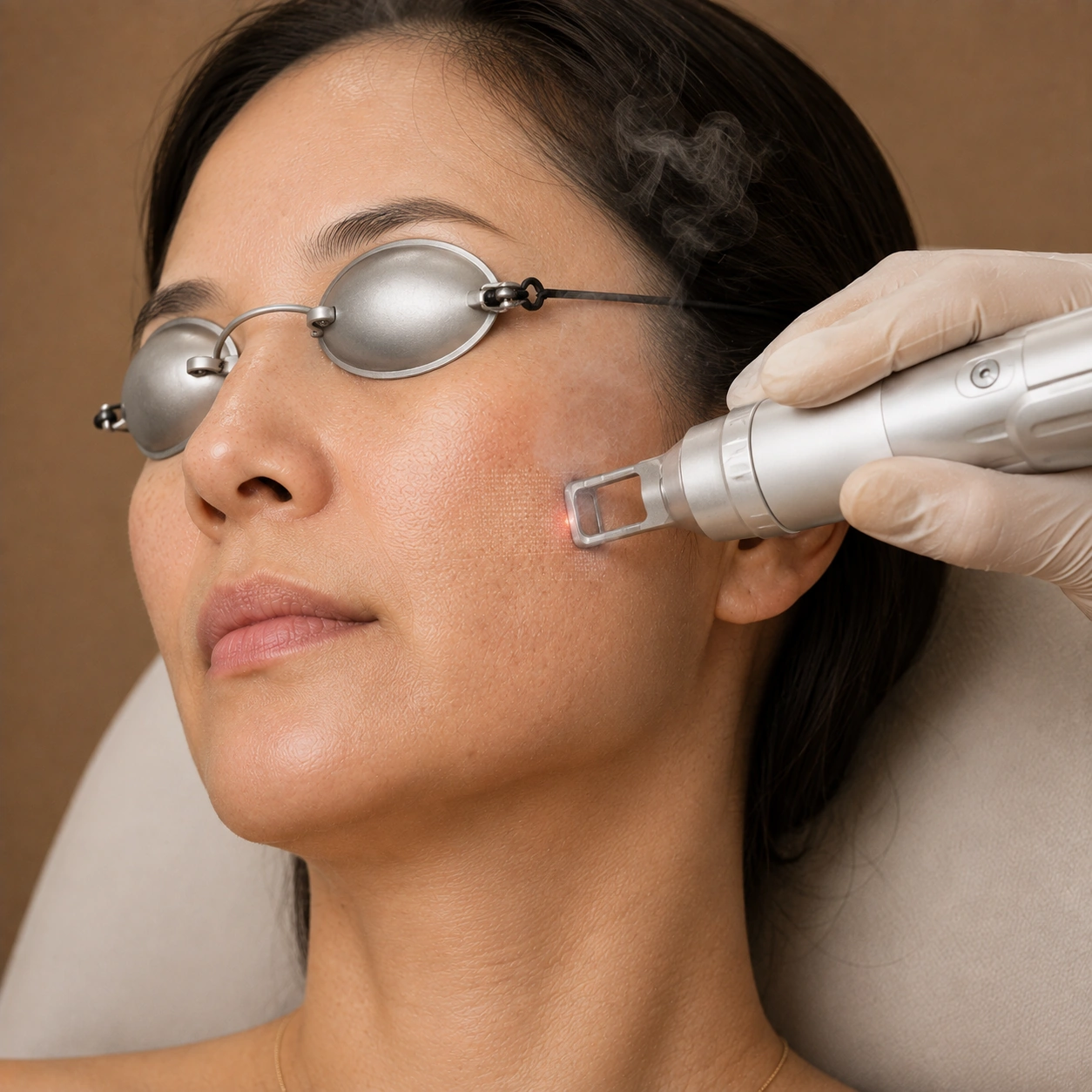
When static lines have altered the surface texture of the skin itself, energy-based devices can resurface and remodel it. These fall into two groups. Laser resurfacing includes UltraClear, a 2910nm fibre laser marketed as a “cold ablative” fractional system, designed to stimulate collagen renewal with reduced downtime compared to traditional CO₂ lasers; and MultiFrax, a dual-wavelength non-ablative fractional laser used for fine lines and overall skin texture. Separately, radiofrequency microneedling with Sylfirm X delivers controlled radiofrequency energy into the dermis through fine needles, rather than light, to encourage tightening and remodelling. Laser and radiofrequency microneedling are distinct technologies, and which is appropriate depends on your skin and the nature of the lines.

Treatment for higher Fitzpatrick skin types (IV–VI) requires careful device selection and conservative settings to reduce the risk of post-inflammatory hyperpigmentation or, in some cases, keloid scarring. Dr Garara has particular experience in aesthetic medicine for skin of colour and tailors device choice, energy levels, and treatment intervals accordingly.

Considering treatment for frown lines?

Book a consultation with Dr Bhavin Garara to discuss which approach suits your skin, your anatomy, and your goals.

Book a Consultation
Compare at a glance

Treatments at a Glance

Prescription muscle-relaxing injections

Best suited for
Dynamic lines visible with movement
Typical downtime
Minimal — brief pinpoint redness
How long results last
Around 3–4 months, varies between individuals
What it does
Softens muscle activity so the skin does not fold

Polynucleotides, PDRN & skinboosters

Best suited for
Thin, dehydrated skin and early static lines
Typical downtime
Small bumps for 24–48 hours
How long results last
Around 6–12 months with a course
What it does
Hydrates and supports the skin’s own collagen production and repair

Collagen biostimulators

Best suited for
Skin laxity and loss of structural support
Typical downtime
Mild swelling for 1–2 days
How long results last
Around 12–18 months following a course
What it does
Gradually builds new collagen over weeks and months

PRP

Best suited for
Skin quality and texture
Typical downtime
1–3 days of mild swelling or redness
How long results last
Variable; benefits build over a course
What it does
Uses your own growth factors to support skin repair

Laser & energy devices

Best suited for
Etched static lines and textural change
Typical downtime
2–7 days depending on the device
How long results last
Long-lasting; results continue developing for months
What it does
Resurfaces the skin and stimulates collagen renewal

Hyaluronic acid filler

Best suited for
Selected cases of deep static lines
Typical downtime
1–3 days of possible swelling or bruising
How long results last
Around 9–18 months
What it does
Provides physical lift to a crease (used very selectively here)

Downtime and duration figures are typical averages only. Individual results vary considerably depending on skin type, age, lifestyle, the specific product used, and how your body responds. Dr Garara will give you a more personalised picture at consultation.

Safety & risk

Is Frown Line Treatment Safe?

Frown line treatments are widely performed, but the glabellar region is an area that demands genuine anatomical expertise. The glabella is an area supplied by branches of the ophthalmic artery. Any injection here, particularly with dermal filler, carries a small but recognised risk of vascular complications, which in rare cases can include skin necrosis or, where the vascular network connects to the eye, loss of vision.

We share this not to alarm you, but because patients deserve full information to make a confident decision. It is also the reason this area should only be treated by an experienced medical practitioner who understands the anatomy, uses safe technique, and is equipped to manage complications immediately if they arise — including the immediate availability of hyaluronidase to reverse hyaluronic acid filler. Dr Garara is always happy to discuss the specific risks of any treatment, and the safety protocols he follows, in detail at your consultation.
  • Qualified medical practitionerTreatment carried out by an experienced doctor with detailed anatomical training.
  • Reversal agents on handHyaluronidase and other complication-management tools are immediately available.
  • Full informed consentRisks, alternatives, and expected outcomes discussed in detail before any treatment.
Dr Bhavin Garara
Reviewed byDr Bhavin Garara

Frequently Asked Questions

Common questions about frown line treatments.

Read next

Related Concerns

Frown lines often appear alongside other signs of upper-face ageing. You may also want to read about:

← All face concerns

For an overview of all the facial concerns we treat, visit our Face treatments hub.

Next step

Ready to take the next step?

Book a consultation with Dr Bhavin Garara for a personalised assessment and treatment plan for your frown lines.

Book a Consultation

Begin with a proper assessment.

Tell us a little about what you're looking for and we'll match you with the right consultation — at the clinic or virtually.

  • Your enquiry goes directly to Dr Bhavin's team.
  • We'll be in touch within one working day.
  • All consultations are strictly confidential.

This page is for general information and does not constitute medical advice. All treatments require a personal consultation. Suitability, risks, and expected outcomes will be discussed with you in detail before any treatment is carried out.