


Dr Bhavin Garara
HomeContact UsUHai — Analyse My Skin
Ageing Eyes

Ageing Eyes

The eye area shows ageing before the rest of the face because the skin around the eyes is the thinnest on the body and the soft tissues beneath it are particularly vulnerable to volume loss and laxity. “Ageing eyes” is a broad concern that brings together several specific changes — fine lines, crow’s feet, hooded upper lids, hollow under-eyes (tear troughs), dark circles, and crepiness in the surrounding skin. The right treatment plan combines what each zone of the eye area needs, with a consistent emphasis on skin quality first, structural support where it is genuinely needed, and surgical referral where appropriate.

Medically reviewed by Dr Bhavin Garara, GMC 7155707 · Last reviewed: 13 March 2026

What it is

What Are Ageing Eyes?

Book a Consultation

The eye area is anatomically complex. It includes the upper eyelid, the brow above, the lateral canthal area (where crow’s feet form), the lower eyelid, the tear-trough region where the lid meets the cheek, and the temple area beside the eye. Each of these zones ages slightly differently and benefits from a slightly different approach. Many patients notice changes in two or three zones at once, which is why a coordinated plan usually works better than a single treatment.

Dr Bhavin Garara’s approach is to start with an honest assessment of each zone and treat what is actually changing — leading with regenerative skin treatments, adding structural support only where there is genuine volume loss, and routing to ophthalmology / oculoplastic specialists where the issue is medical rather than aesthetic.

Where it shows

The Zones of the Eye Area

Each of these is its own detailed concern with its own page. This page sits as the eye-area hub.

  • The brow and upper lid

    Brow descent, upper-lid hooding, and changes in the frontal muscles — see hooded eyes and forehead lines.

  • The lateral canthal area (crow’s feet)

    Fine lines that radiate outward when smiling — see crow’s feet.

  • The under-eye and tear trough

    Hollowing where the lower lid meets the cheek, often producing a shadowed under-eye — see hollow eyes / tear troughs.

  • Dark circles

    Discolouration or shadowing under the eyes — see dark circles.

  • The temple

    Volume loss at the side of the eye that affects how the whole upper-face scaffolding sits.

What causes it

What Causes Ageing Eyes?

  1. 1

    Thinning skin and decline in collagen and elastin

    The eye-area skin is the thinnest on the body, with limited collagen reserve. Fibroblast activity declines with age, the skin holds less water, and the underlying vasculature becomes more visible.

  2. 2

    Volume changes in the mid-face

    Fat pads in the cheek and temple gradually lose volume, the bony orbit subtly remodels, and the mid-face scaffolding that supports the lower lid descends. This drives tear-trough hollowing and the shadowing often described as “dark circles.”

  3. 3

    Repeated muscle movement

    The orbicularis oculi (the muscle around the eye) contracts thousands of times daily. Over years, this drives crow’s feet, fine lines, and the dynamic component of hooded eyes.

  4. 4

    Sun damage

    The periorbital area is highly exposed and chronically under-protected. UV breaks down collagen and elastin and drives pigmentary change.

  5. 5

    Genetics

    Family pattern shapes how the eye area ages — pigmentation patterns, skin thickness, fat-pad distribution, and brow position are all partly inherited.

  6. 6

    Medical and lifestyle factors

    Allergies, chronic eye-rubbing, dry eye, screen time, poor sleep, smoking, and dehydration all influence how the eye area looks. Severe changes — particularly sudden ones — should be assessed medically.

    Some eye-area changes — particularly sudden eyelid drooping, asymmetric changes, swelling that does not settle, or vision changes — can indicate a medical condition. This page is general information, not a diagnosis. If anything sounds like what you are noticing, the right first step is to see your GP or an ophthalmology / oculoplastic specialist.

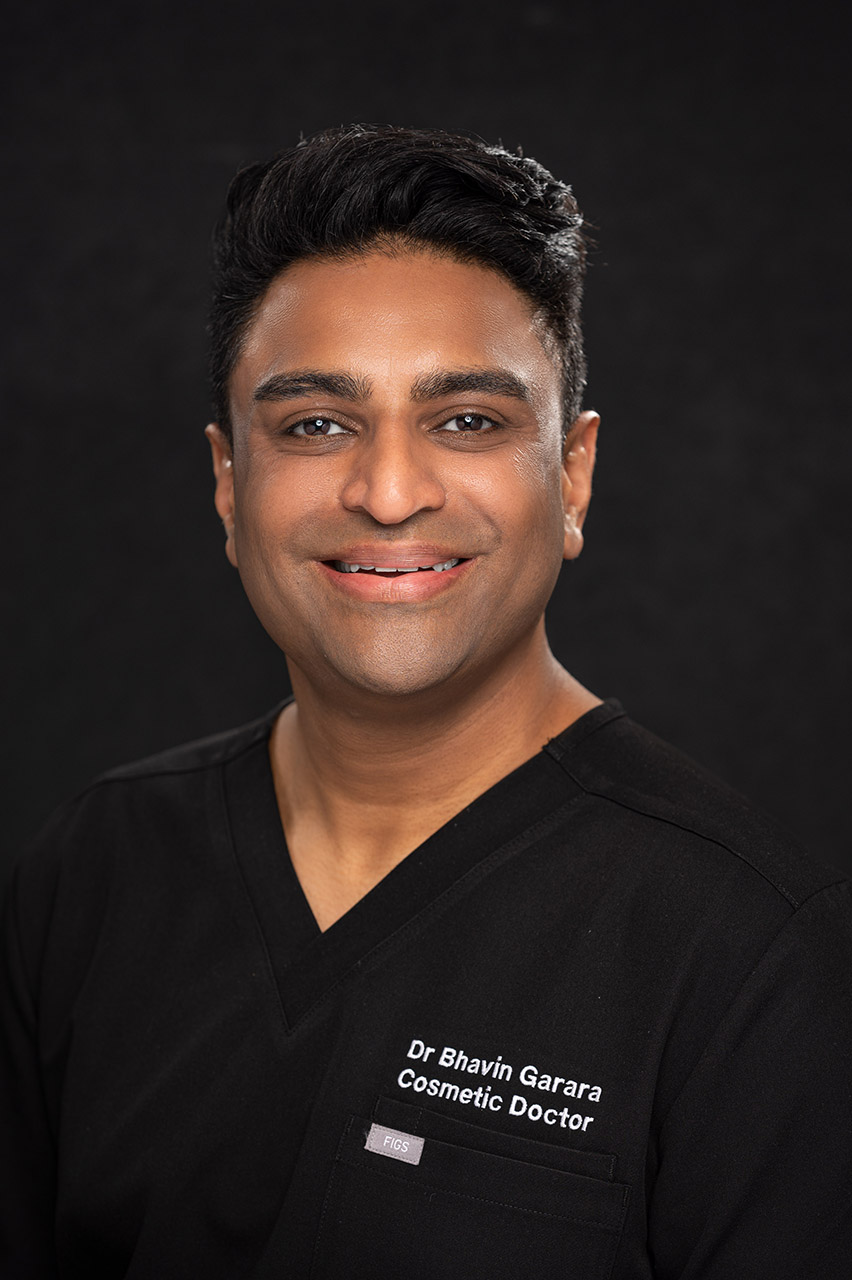
Dr Bhavin Garara
Dr Bhavin Garara, MBBS, BMedSci, PGDip
Book a Consultation
Dr Garara's approach

How Dr Bhavin Garara Treats Ageing Eyes

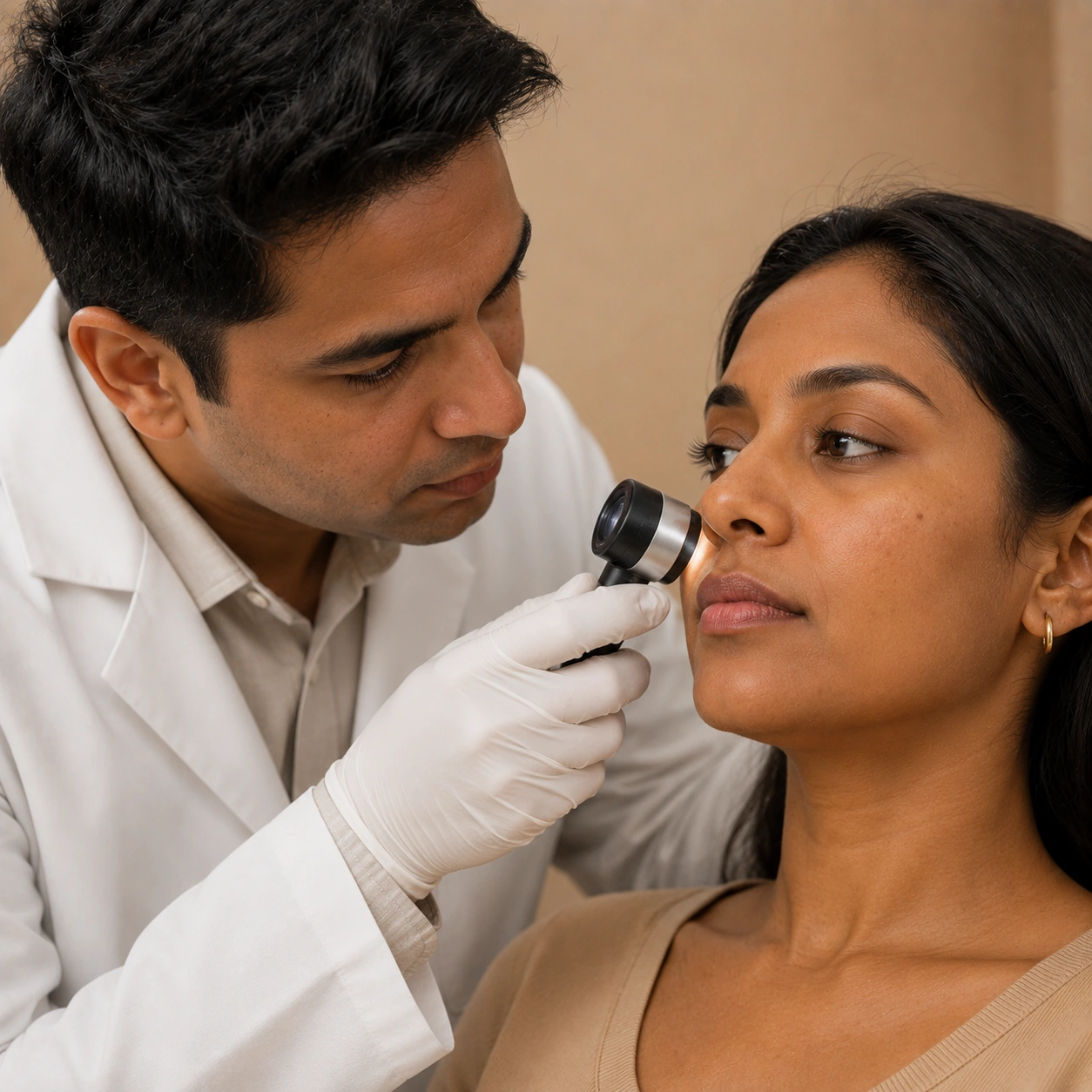
At the clinics in London, Dr Garara carries out a zone-by-zone assessment of the eye area at consultation — brow position, upper-lid skin, lateral canthal lines, lower-lid skin and fat-pad position, tear-trough depth, mid-face support, temple volume, and pigmentation pattern. From this, he designs a coordinated plan that usually combines skin-quality treatments in the surrounding eye-area skin (polynucleotides, multi-ingredient skinboosters, PRP / platelet-derived exosomes); carefully chosen muscle-relaxing micro-doses for dynamic concerns (crow’s feet, chemical brow lift); structural support where genuine volume loss has occurred — usually placed on the cheekbone or temple, not directly into the eyelid; energy-based treatments for skin laxity and texture (radiofrequency microneedling, laser); and referral where the issue crosses into medical territory.
  • Anatomy-led assessmentTreatment plans built around your unique facial structure and movement.
  • Personalised planCombinations chosen for your skin, goals, and lifestyle — not a one-size-fits-all protocol.
  • Natural resultsA refreshed, well-rested version of you — never a frozen or over-treated look.

Prevention

Home Care for Ageing Eyes

The eye area benefits from a few simple, consistent habits.

Prevention

Features

Treatment Options for Ageing Eyes

Regenerative skin treatments, carefully chosen muscle-relaxing micro-doses, energy-based treatments, and structural support including Seffiller (autologous regenerative).

Regenerative skin treatments (the foundation)

Regenerative skin treatments (the foundation)

Polynucleotides (Rejuran®, including the formulation suited to the eye area), PDRN, multi-ingredient skinboosters (Profhilo, Sunekos, NCTF, klardie), and autologous PRP / platelet-derived exosomes support quality and resilience of the thin eye-area skin.

Carefully chosen muscle-relaxing micro-doses

Carefully chosen muscle-relaxing micro-doses

Very small, precisely placed doses can soften specific muscle activity (crow’s feet, chemical brow lift, micro-Botox) without changing facial expression. Crow’s feet is a UK-licensed indication; other peri-orbital uses are off-licence.

Energy-based treatments

Energy-based treatments

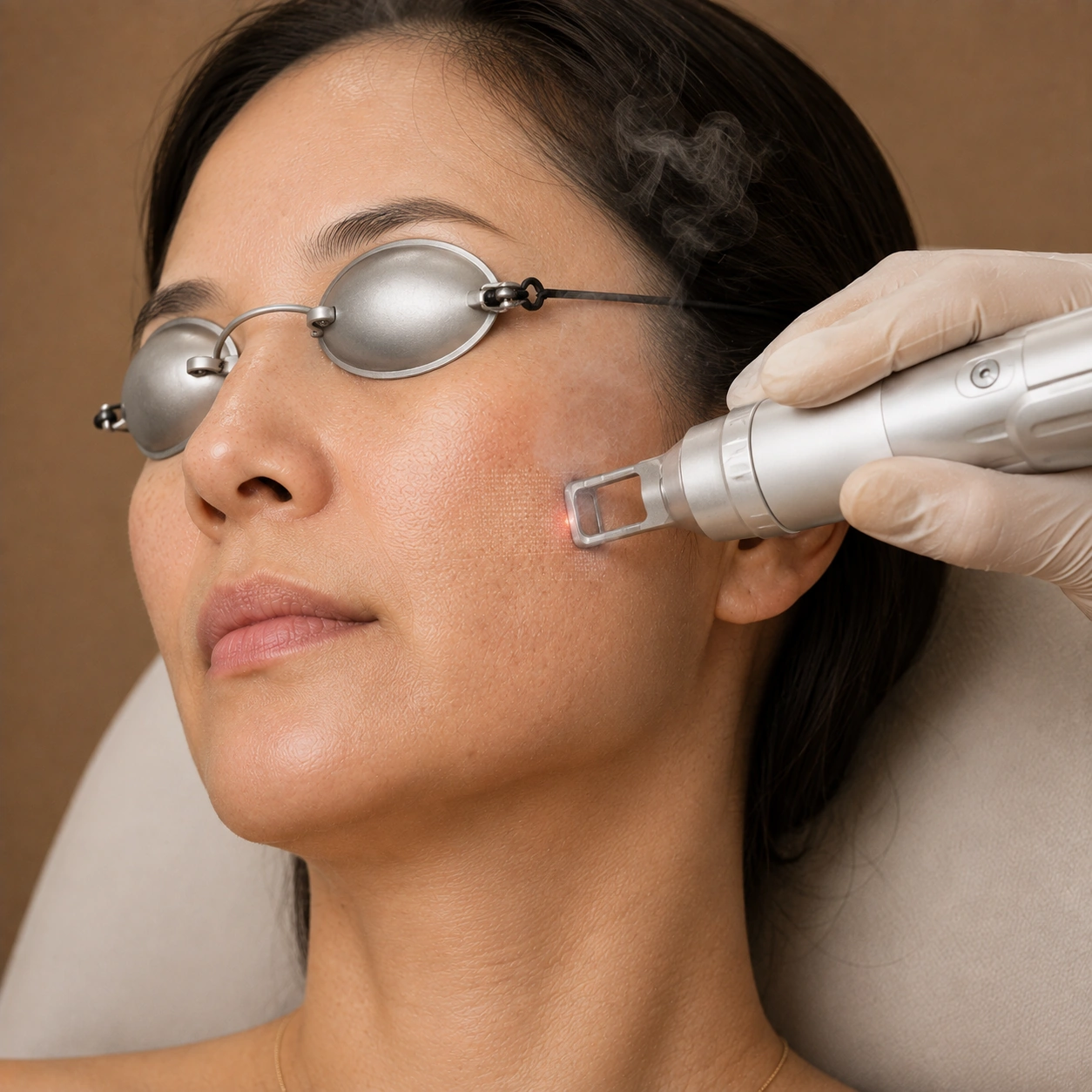
Sylfirm X radiofrequency microneedling tightens lax peri-orbital skin; MultiFrax and UltraClear lasers refine surface texture and address sun damage on surrounding skin.

Structural support (selective)

Structural support (selective)

Where genuine mid-face volume loss is shadowing the lower lid or pulling the lateral brow, support placed on the cheekbone or temple — HA filler, PLLA / CaHA biostimulators, or Seffiller (autologous regenerative) — lifts the upper-face scaffolding without placing filler directly into the very thin eyelid skin.

When non-surgical treatment is not the right answer

When non-surgical treatment is not the right answer

For severe upper-lid hooding affecting vision, true ptosis, or significant lower-lid skin redundancy or fat herniation, the right pathway is an ophthalmology or oculoplastic specialist for surgical assessment. The clinic does not perform surgery.

Treatment is layered to address the zones that are actually changing — regenerative skin treatments first, with muscle softening, structural support, and energy-based remodelling added selectively.

Regenerative skin treatments (the foundation)

  • Best for: Thin, crepey under-eye and brow skin
  • Downtime: 1–3 days of mild bumps or swelling
  • Lasts: Around 6–12 months with a course

For the very thin skin around the eyes, treatments that improve skin quality and resilience are usually the first line. Polynucleotides (PN) — long-chain DNA fragments from wild salmon, brand example Rejuran® — are understood to act as a “repair signal,” supporting fibroblasts to produce more collagen and elastin, and helping the skin hold moisture. A formulation suited to the delicate skin around the eye is often used here. PDRN is a related compound that supports the skin’s repair processes and is useful in this sensitive area. Multi-ingredient skinboosters such as Profhilo, Sunekos, NCTF, and klardie deliver hyaluronic acid and balanced nutrients to support hydration and quality. PRP and platelet-derived exosomes (both autologous, derived from the patient’s own platelets) can also support tissue quality in this area. Treatment is typically a short course of 2–3 sessions a few weeks apart.

Carefully chosen muscle-relaxing micro-doses

  • Best for: Crow’s feet, dynamic brow position, micro-folding
  • Downtime: None to minimal
  • Lasts: Around 3–4 months

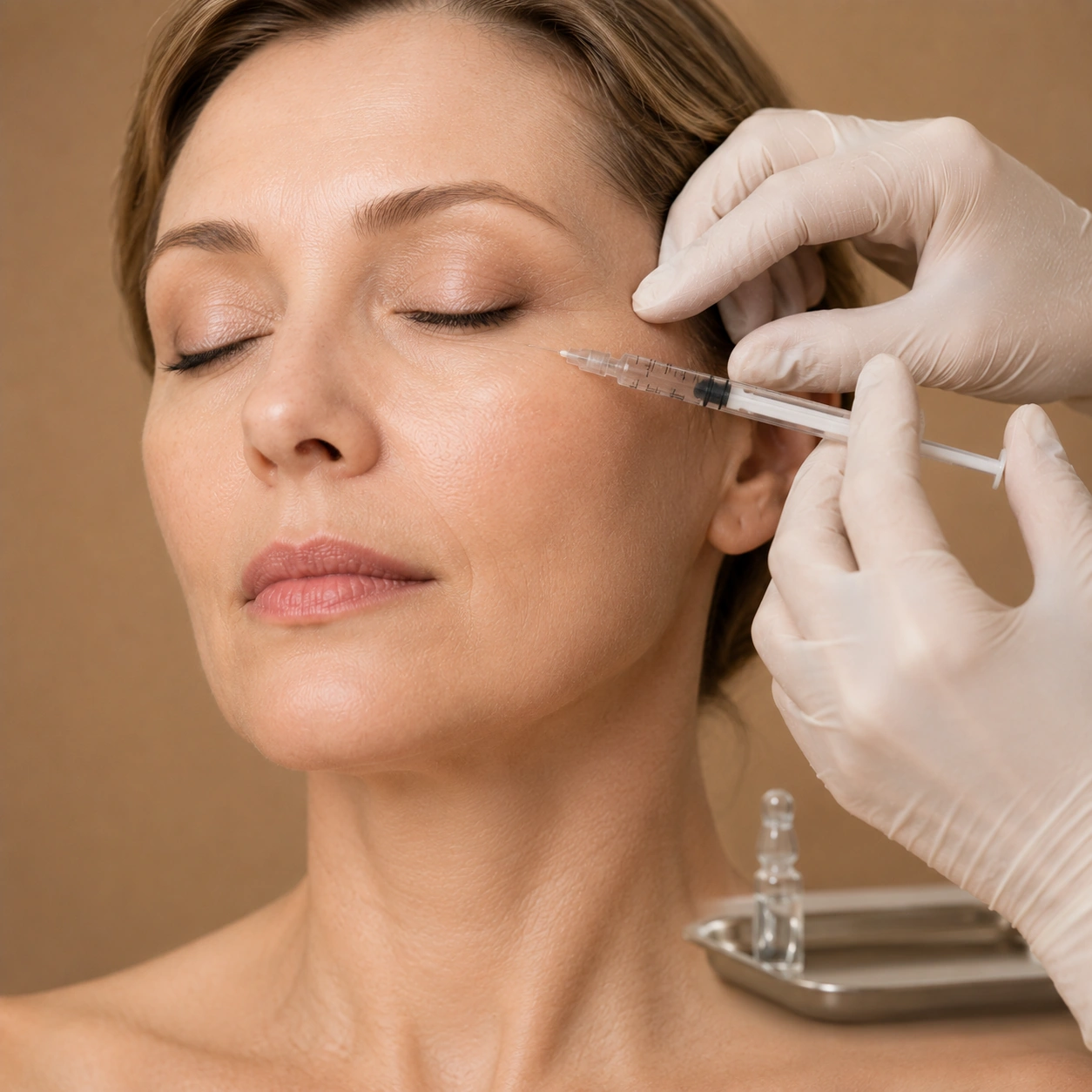
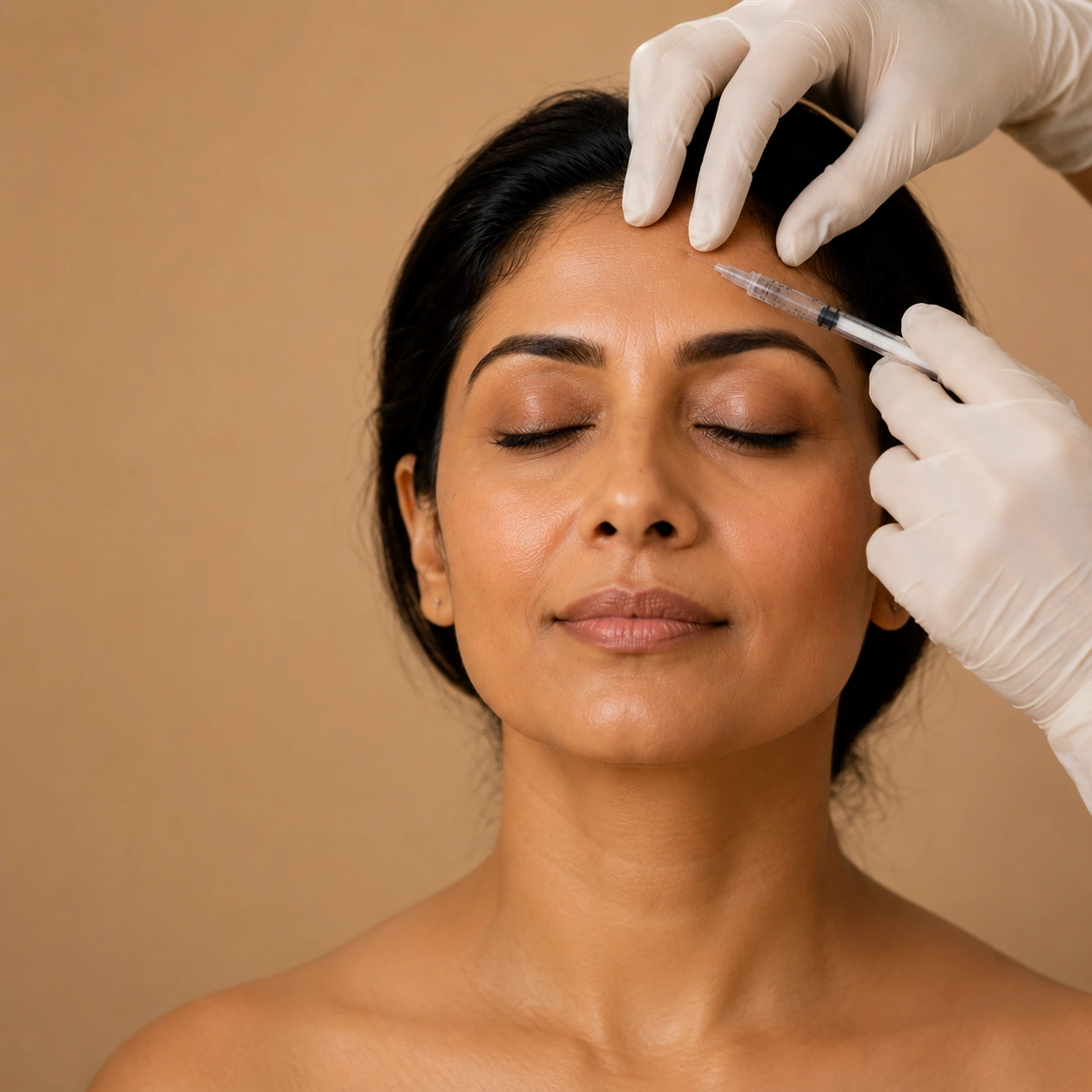
For dynamic concerns — crow’s feet, brow position, and superficial skin micro-folding — very small doses of prescription muscle-relaxing injection placed precisely can soften specific muscle activity without changing facial expression.

Prescription muscle-relaxing injections work by temporarily reducing the activity of specific muscles, so the skin above them stops folding with each movement. The active ingredient is botulinum toxin type A, a purified protein delivered in very small, precisely placed doses. These are prescription-only medicines in the UK, which means they can only be prescribed and administered by a qualified medical prescriber following a face-to-face consultation. Whether this treatment is suitable for you, and what specific product or dose would be used, is something Dr Garara will discuss with you at consultation. It is not suitable for everyone.

The crow’s feet area is a licensed indication for botulinum toxin in the UK. Other peri-orbital uses (chemical brow lift, micro-Botox to the lower eyelid) are off-licence:

Off-licence peri-orbital uses are established, lawful practice in qualified medical hands, but not specifically licensed by UK regulators for these particular indications. Dr Garara will explain this fully at consultation, including why he considers it appropriate for your case, and will obtain your informed consent before any treatment.

Energy-based treatments

  • Best for: Thin, crepey under-eye and brow skin
  • Downtime: 1–3 days of mild bumps or swelling
  • Lasts: Around 6–12 months with a course

Radiofrequency microneedling with Sylfirm X tightens lax peri-orbital skin and supports collagen remodelling. MultiFrax and UltraClear lasers refine surface texture and address sun damage on the surrounding skin. Treatment for higher Fitzpatrick skin types (IV–VI) requires careful device selection and conservative settings to reduce the risk of post-inflammatory hyperpigmentation or, in some cases, keloid scarring. Dr Garara has particular experience in aesthetic medicine for skin of colour and tailors device choice, energy levels, and treatment intervals accordingly.

Structural support (selective)

  • Best for: Genuine mid-face or temple volume loss
  • Downtime: 1–10 days depending on the treatment
  • Lasts: HA ~12–18 months; biostimulators ~12–18 months; Seffiller variable — a proportion of transferred fat integrates and lasts

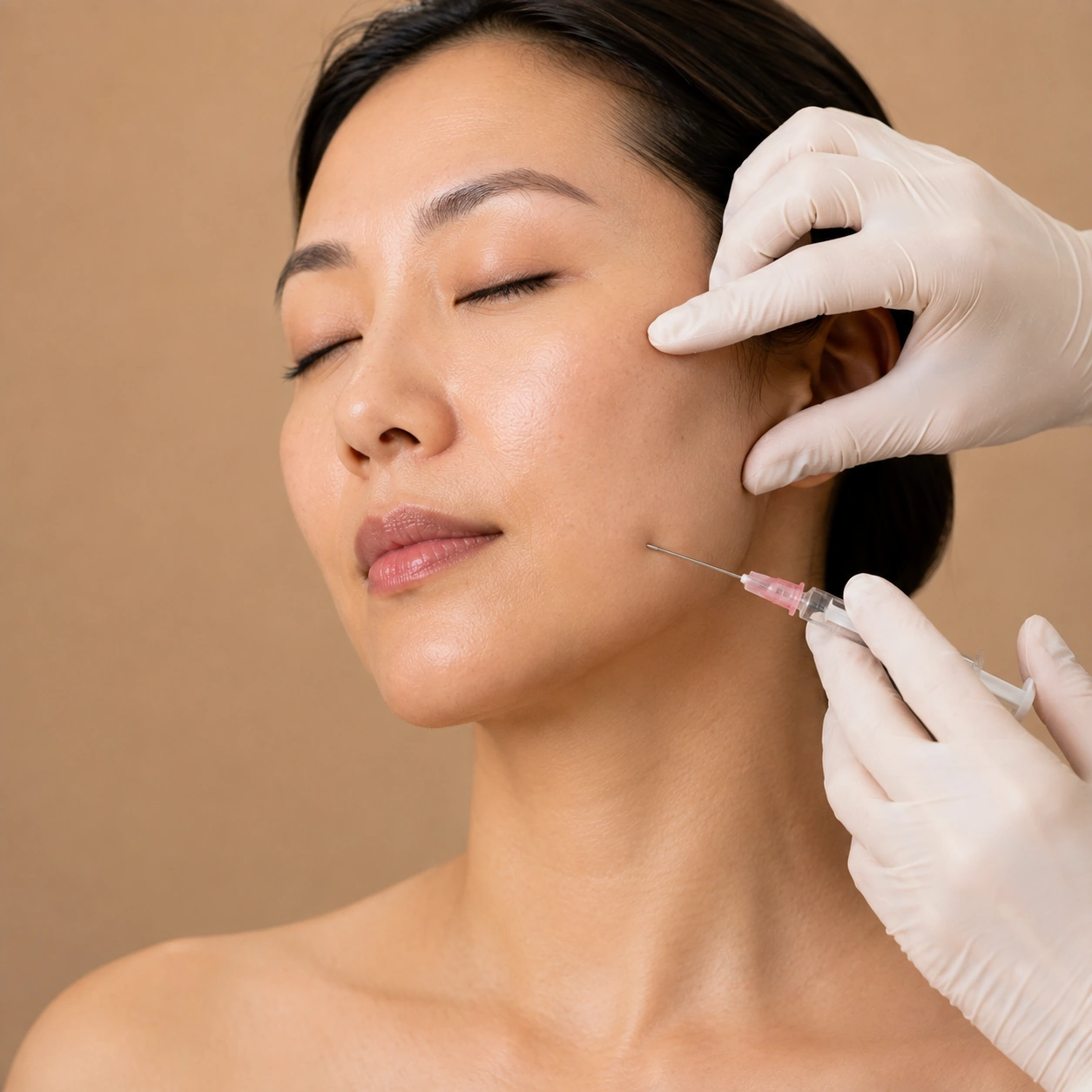
For genuine mid-face volume loss that is shadowing the lower lid or pulling the lateral brow downward, structural support placed on the cheekbone or in the temple can lift the whole upper-face scaffolding — without placing filler directly into the very thin eyelid skin. Options include hyaluronic acid (HA) filler placed deep on the bone with a cannula; collagen biostimulators — poly-L-lactic acid (PLLA) or calcium hydroxyapatite (CaHA) preparations — that gradually support collagen production over months; and Seffiller, the clinic’s autologous regenerative treatment using your own fat (the SEFFI / microfat / nanofat technique). Seffiller is autologous (uses the patient’s own tissue) and is used for facial and skin volume restoration. A proportion of transferred fat integrates and provides long-lasting volume; results vary between individuals. Seffiller is not a polynucleotide and not an off-the-shelf HA filler.

Hyaluronic acid filler is reversible — it can be dissolved using an enzyme called hyaluronidase. If you are considering correcting or reversing previous filler, or want to understand more about how filler can be safely removed, see our page on filler removal and dissolving.

See our page on filler removal and dissolving.

When non-surgical treatment is not the right answer

  • Best for: Vision-affecting hooding, ptosis, significant lower-lid redundancy
  • Downtime: Surgical recovery
  • Lasts: Long-lasting

For severe upper-lid hooding affecting vision, true ptosis, or significant lower-lid skin redundancy or fat herniation, the right pathway is an ophthalmology or oculoplastic specialist for surgical assessment (often via NHS referral). The clinic does not perform surgery; Dr Garara will say so honestly at consultation where surgery is the right answer.

Considering treatment for ageing eyes?

Book a consultation with Dr Bhavin Garara to discuss a coordinated plan for the zones that matter to you.

Book a Consultation
Compare at a glance

Treatments at a Glance

Regenerative skin treatments

Best suited for
Thin, crepey under-eye and brow skin
Typical downtime
1–3 days of mild bumps or swelling
How long results last
Around 6–12 months with a course
What it does
Supports skin quality and dermal thickness

Muscle-relaxing micro-injections

Best suited for
Crow’s feet, dynamic brow position, micro-folding
Typical downtime
None to minimal
How long results last
Around 3–4 months
What it does
Softens specific muscle activity

Radiofrequency microneedling and laser

Best suited for
Skin laxity and surface change
Typical downtime
2–7 days depending on device
How long results last
Long-lasting; results continue for months
What it does
Tightens and resurfaces

Structural support (HA / biostimulator / Seffiller)

Best suited for
Genuine mid-face or temple volume loss
Typical downtime
1–10 days depending on the treatment
How long results last
HA ~12–18 months; biostimulators ~12–18 months; Seffiller variable — a proportion of transferred fat integrates and lasts
What it does
Restores foundation underneath the eye area

Surgical referral (oculoplastic)

Best suited for
Vision-affecting hooding, ptosis, significant lower-lid redundancy
Typical downtime
Surgical recovery
How long results last
Long-lasting
What it does
Surgical correction by an oculoplastic specialist

Downtime and duration figures are typical averages only. Individual results vary considerably. Dr Garara will give you a more personalised picture at consultation.

Safety & risk

Is Eye Area Treatment Safe?

The peri-orbital area is anatomically demanding. The temple, the tear trough, and the upper eyelid are supplied by branches of the ophthalmic artery — the main blood supply to the eye. Any injection here, particularly with dermal filler, biostimulator, or autologous fat, carries a small but recognised risk of vascular complications, which in rare cases can include skin necrosis or, where the vascular network connects to the eye, loss of vision. The tear trough specifically is on the list of higher-risk anatomical areas.

We share this not to alarm you, but because patients deserve full information to make a confident decision. The eye area should only be treated by an experienced medical practitioner who understands the anatomy, uses safe technique, and is equipped to manage complications immediately if they arise — including the immediate availability of hyaluronidase to reverse hyaluronic acid filler. Dr Garara is always happy to discuss the specific risks of any treatment, and the safety protocols he follows, in detail at your consultation.
  • Qualified medical practitionerTreatment carried out by an experienced doctor with detailed anatomical training.
  • Reversal agents on handHyaluronidase and other complication-management tools are immediately available.
  • Full informed consentRisks, alternatives, and expected outcomes discussed in detail before any treatment.
Dr Bhavin Garara
Reviewed byDr Bhavin Garara

Frequently Asked Questions

Common questions about treating the ageing eye area.

Read next

Related Concerns

The eye-area concerns interconnect tightly. You may also want to read about:

← All eyes concerns

For an overview of all the facial concerns we treat, visit our Eyes treatments hub.

Next step

Ready to take the next step?

Book a consultation with Dr Bhavin Garara.

Book a Consultation

Begin with a proper assessment.

Tell us a little about what you're looking for and we'll match you with the right consultation — at the clinic or virtually.

  • Your enquiry goes directly to Dr Bhavin's team.
  • We'll be in touch within one working day.
  • All consultations are strictly confidential.

This page is for general information and does not constitute medical advice. All treatments require a personal consultation. Suitability, risks, and expected outcomes will be discussed with you in detail before any treatment is carried out.