


Dr Bhavin Garara
HomeContact UsUHai — Analyse My Skin
Hooded Eyes

Hooded Eyes

Hooded eyes are a feature in which the upper eyelid skin rests over the lash line, partly covering the visible eye and sometimes making the eyes look heavier or more tired than they feel. For most people they are an entirely natural feature — anatomy, genetics, and the slow descent of the brow with age all play a part. Where they have become more pronounced over time, a thoughtful combination of muscle-relaxing injections, radiofrequency microneedling, regenerative skin treatments, and — in selected cases — biostimulators or filler placed in the temple and brow area can soften the hooding without surgery. Where hooding is severe enough to affect vision, the right pathway is an ophthalmology or oculoplastic referral, not aesthetic medicine.

Medically reviewed by Dr Bhavin Garara, GMC 7155707 · Last reviewed: 8 May 2026

What it is

What Are Hooded Eyes?

Book a Consultation

A hooded eye is one in which the soft tissue and skin of the upper eyelid drape further forward and downward than is typical, so that less of the eyelid is visible and the natural crease above the lash line is partly or fully covered. For some people this is simply how their eyes have always been — a natural feature of their family’s anatomy that they often share with parents and grandparents. For others, hooding becomes more pronounced over time as the brow gradually descends and the upper-eyelid skin thins and loses elasticity.

The eyelid itself is anatomically remarkable. The upper-lid skin is the thinnest skin on the body, and it sits over the levator palpebrae superioris — the muscle that opens the eye — and the orbital septum and fat pads behind it. Above the lid sits the frontalis muscle, the only muscle that lifts the eyebrow. Below the brow lie a group of small muscles — the corrugator supercilii, procerus, and the lateral fibres of the orbicularis oculi — that pull the brow downward and inward. The balance between these lifters and depressors determines how high the brow sits, and the brow position in turn determines how much the eyelid skin drapes over the eye.

Dr Bhavin Garara’s approach to hooded eyes is anatomy-led. The aim is first to work out whether the hooding is mainly about brow position, mainly about the eyelid skin, or — most often — a combination of the two, then to choose treatments that address what is actually driving the appearance. The result should look like rested, more open eyes — not a changed face.

Side by side

Brow Position vs Eyelid Skin

Working out which factor is driving your hooding is the central step in deciding which treatments are likely to help.

Brow descent

The eyebrow sits lower than it used to, particularly at the tail (the outer end), and pushes the upper-lid skin down onto the lash line. The skin itself may be of reasonable quality, but its position has changed because the brow above it has dropped.

Eyelid skin laxity

The brow is in a good position, but the upper-lid skin itself has stretched, thinned, and lost elasticity, so it drapes over the lash line regardless of what the brow is doing.

Combined hooding

A descended brow and lax upper-lid skin. This is the most common pattern from middle age onwards, and it is usually treated with a combination of approaches.

Why this matters: the right treatment differs by pattern. A chemical brow lift makes a meaningful difference if the cause is brow descent; it makes a much smaller difference if the brow is already in a good position and the issue is the skin itself. Likewise, energy-based skin treatments help loose upper-lid skin but cannot meaningfully change brow position.

What causes it

What Causes Hooded Eyes?

Hooded eyes develop from a mix of natural anatomy, ageing biology, and environmental factors.

  1. 1

    Genetics and natural anatomy

    Many people have a hooded eye shape from a young age — a natural variation in how the eyelid skin and brow are arranged. This is a feature, not a problem, and treatment is a choice rather than a correction.

  2. 2

    Gradual descent of the brow with age

    With age, the soft tissues of the upper face — fat pads, fascia, and supporting structures — gradually lose volume and structural support. The bony orbit (the eye socket) also subtly remodels over decades. The combined effect is that the brow tends to descend slightly, particularly at the tail, pushing skin down onto the eyelid.

  3. 3

    Decline in skin elasticity

    The upper-lid skin is the thinnest skin on the body and has limited reserves of collagen and elastin. As fibroblasts become less active with age, the skin loses elasticity, thins further, and drapes more readily.

  4. 4

    Sun exposure and lifestyle

    Ultraviolet light breaks down collagen and elastin throughout the face, and the eyelid is no exception. Smoking, poor sleep, chronic eye-rubbing, and habitual brow-raising or squinting all contribute to how quickly and how severely upper-lid changes appear.

  5. 5

    Underlying medical causes (when to seek a different opinion)

    In a small number of people, what looks like hooding is actually a medical condition — particularly ptosis (a weakness of the levator muscle that opens the eyelid) or dermatochalasis (a clinical degree of redundant eyelid skin severe enough to affect peripheral vision). These are medical conditions, not aesthetic features, and the right pathway is an ophthalmology or oculoplastic specialist — often via your GP or NHS referral — rather than an aesthetic clinic.

    Hooded eyes are usually an anatomical feature. Some upper-eyelid changes, however — particularly drooping that affects vision, sudden changes in eyelid position, or asymmetric drooping — can be signs of a medical condition that needs assessment by an ophthalmology or oculoplastic specialist. This page is general information, not a diagnosis. If anything described above sounds like what you are noticing, the right first step is to see your GP or an eye-care specialist.

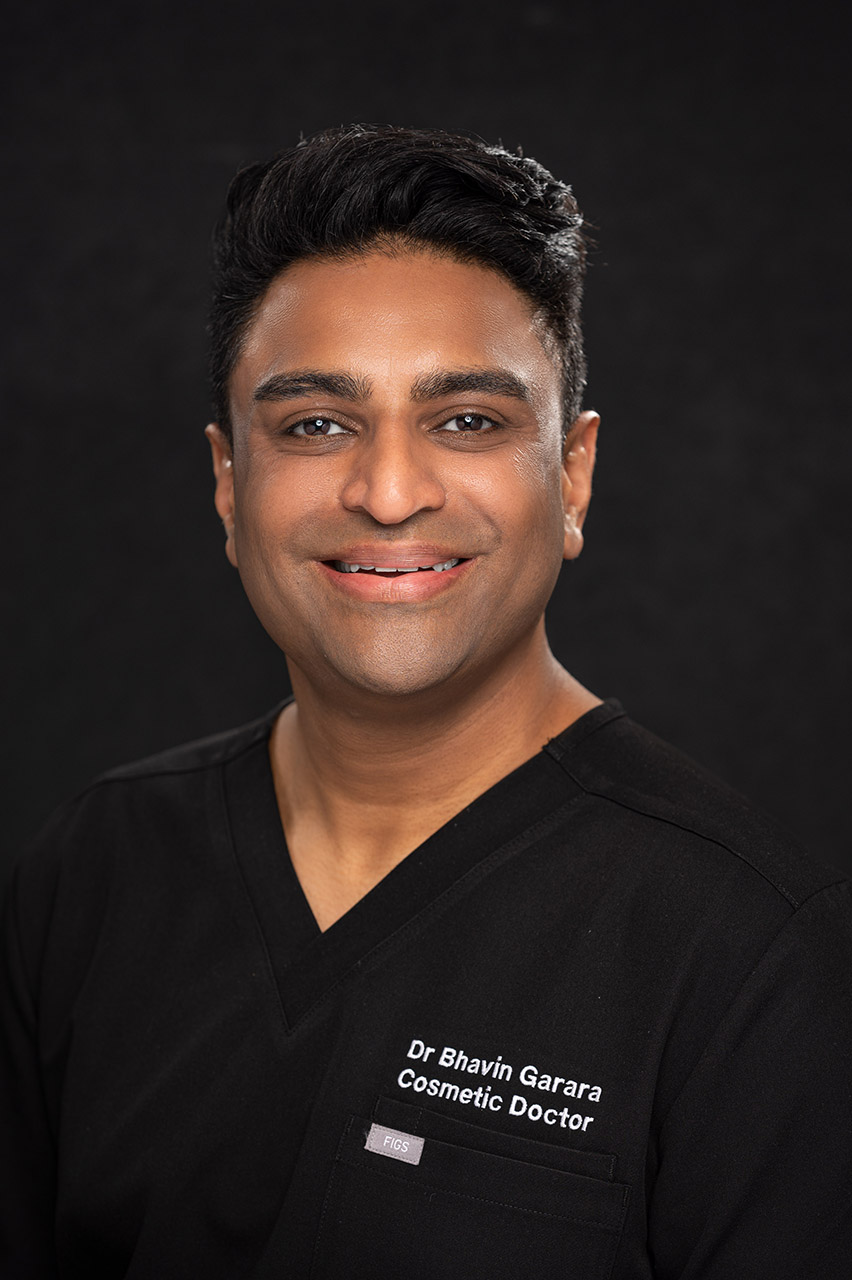
Dr Bhavin Garara
Dr Bhavin Garara, MBBS, BMedSci, PGDip
Book a Consultation
Dr Garara's approach

How Dr Bhavin Garara Treats Hooded Eyes

A successful non-surgical approach to hooded eyes starts with an accurate read of the anatomy.

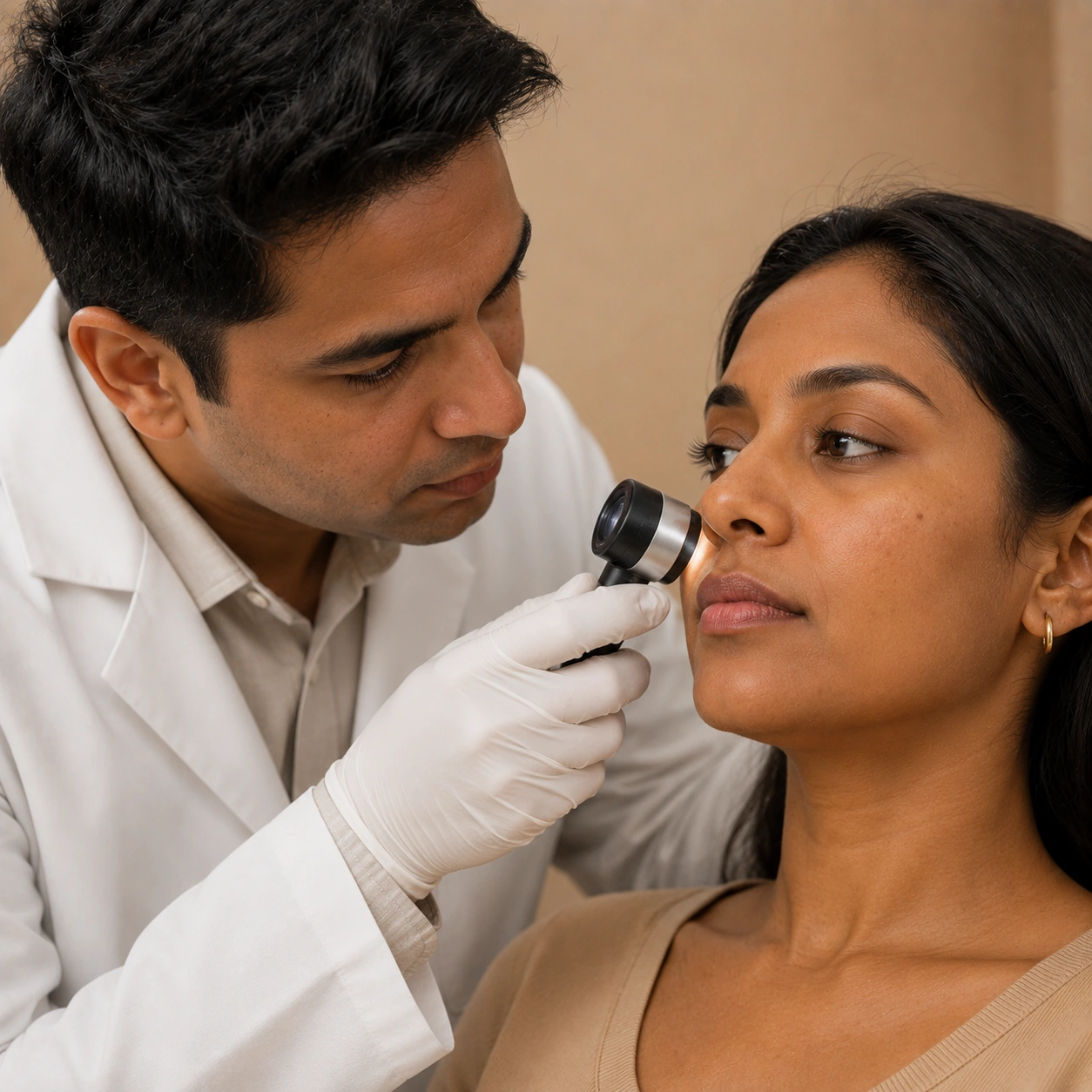
At the clinics in London, Dr Garara assesses at consultation the resting position of your brow at each end (head and tail), the activity and balance of the muscles that lift and depress the brow, the quality and laxity of the upper-lid skin itself, the volume and support of the temple and forehead area, whether the eyelid creases are visible or covered, and how all of this relates to the rest of your upper face. He also looks specifically for any sign that the hooding may have a medical rather than an aesthetic cause — and will refer onward if it does.

From this, he designs a plan that may combine a chemical brow lift with radiofrequency microneedling for the eyelid skin, regenerative skin treatments to improve quality and resilience, and — in selected cases — small amounts of structural support in the temple or under the lateral brow. The aim is to soften the hooding to a degree that looks like a rested version of you, not a different face.

  • Anatomy-led assessmentTreatment plans built around your unique facial structure and movement.
  • Personalised planCombinations chosen for your skin, goals, and lifestyle — not a one-size-fits-all protocol.
  • Natural resultsA refreshed, well-rested version of you — never a frozen or over-treated look.

Prevention

How to Care for the Eye Area at Home

The eye area benefits from a few simple, consistent habits.

Prevention

Features

Treatment Options for Hooded Eyes

Chemical brow lift, radiofrequency microneedling, laser resurfacing, regenerative skin treatments, selective structural support — and, where appropriate, referral to oculoplastic specialists.

Chemical brow lift — prescription muscle-relaxing injections

Chemical brow lift — prescription muscle-relaxing injections

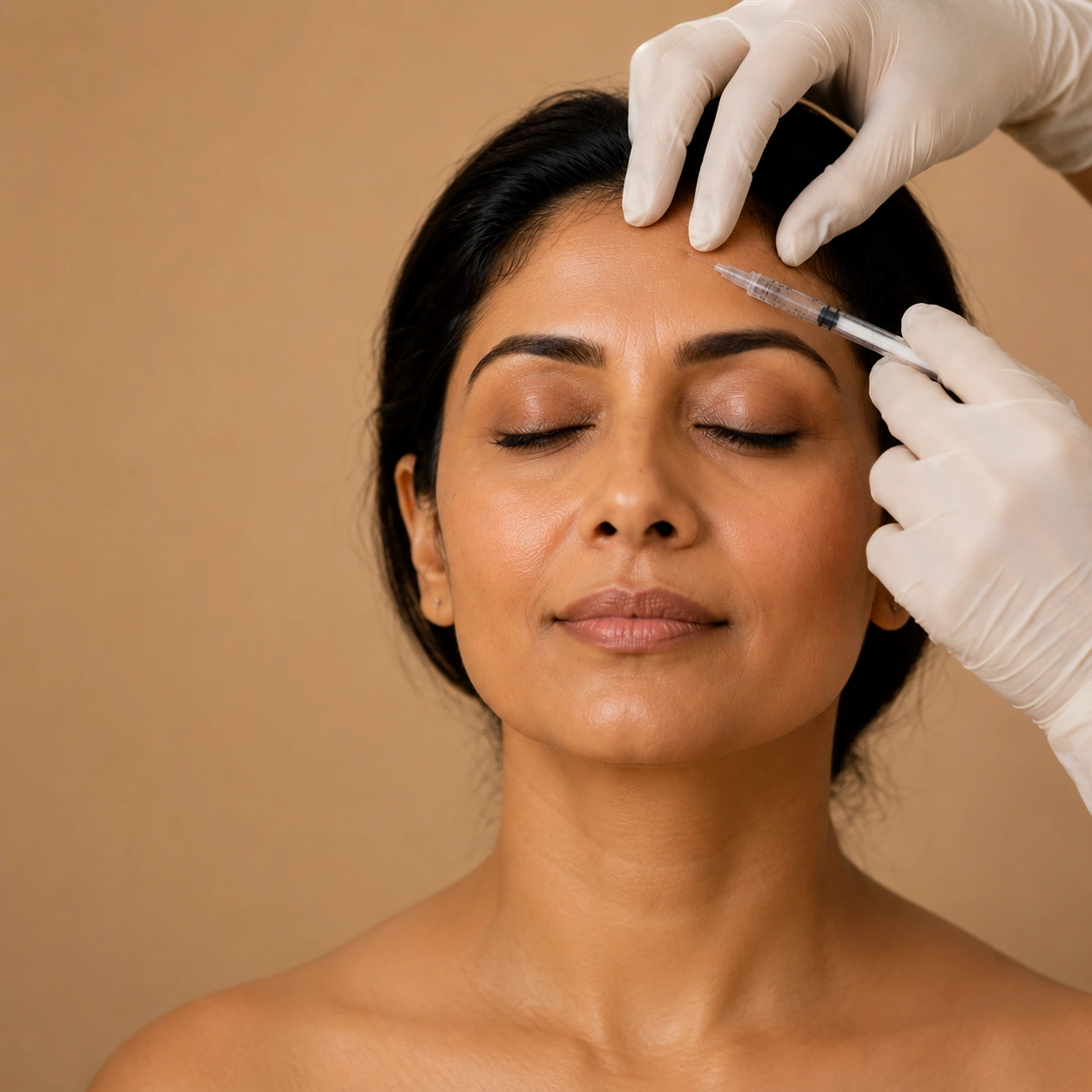
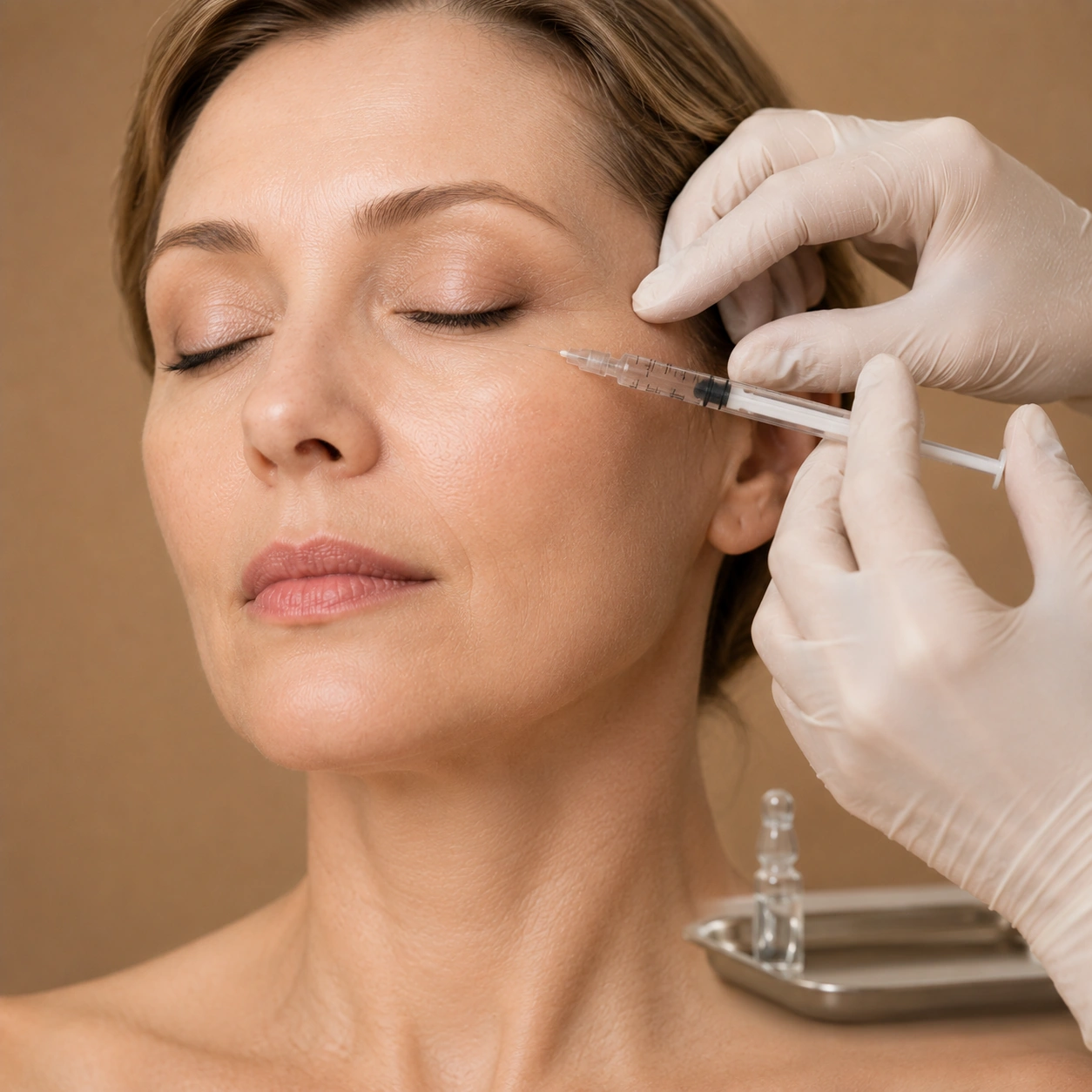
For hooding driven by a descended brow, very small doses placed into the brow-depressor muscles allow the frontalis to lift the brow, raising the upper-lid skin off the lash line.

Radiofrequency microneedling for upper-lid skin

Radiofrequency microneedling for upper-lid skin

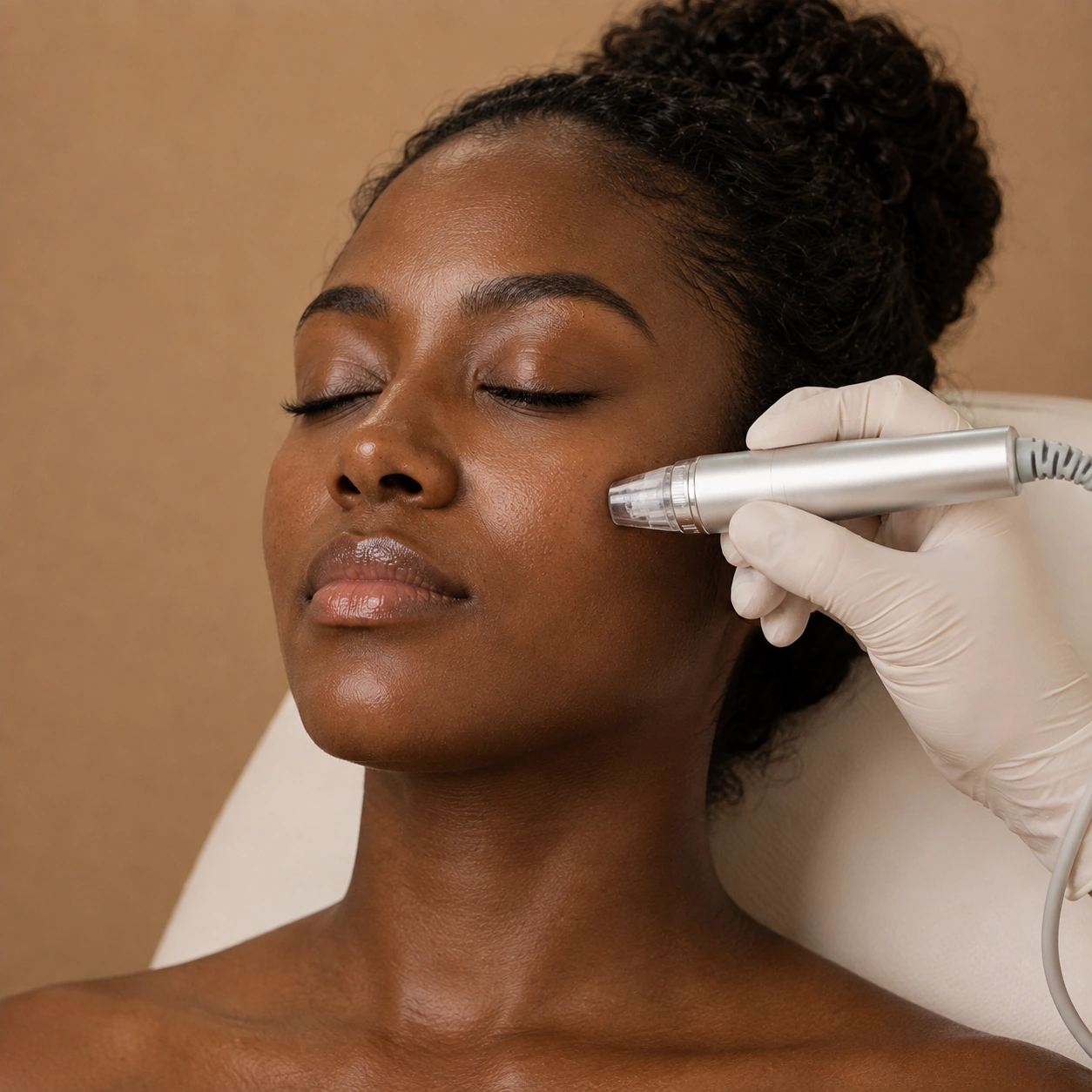
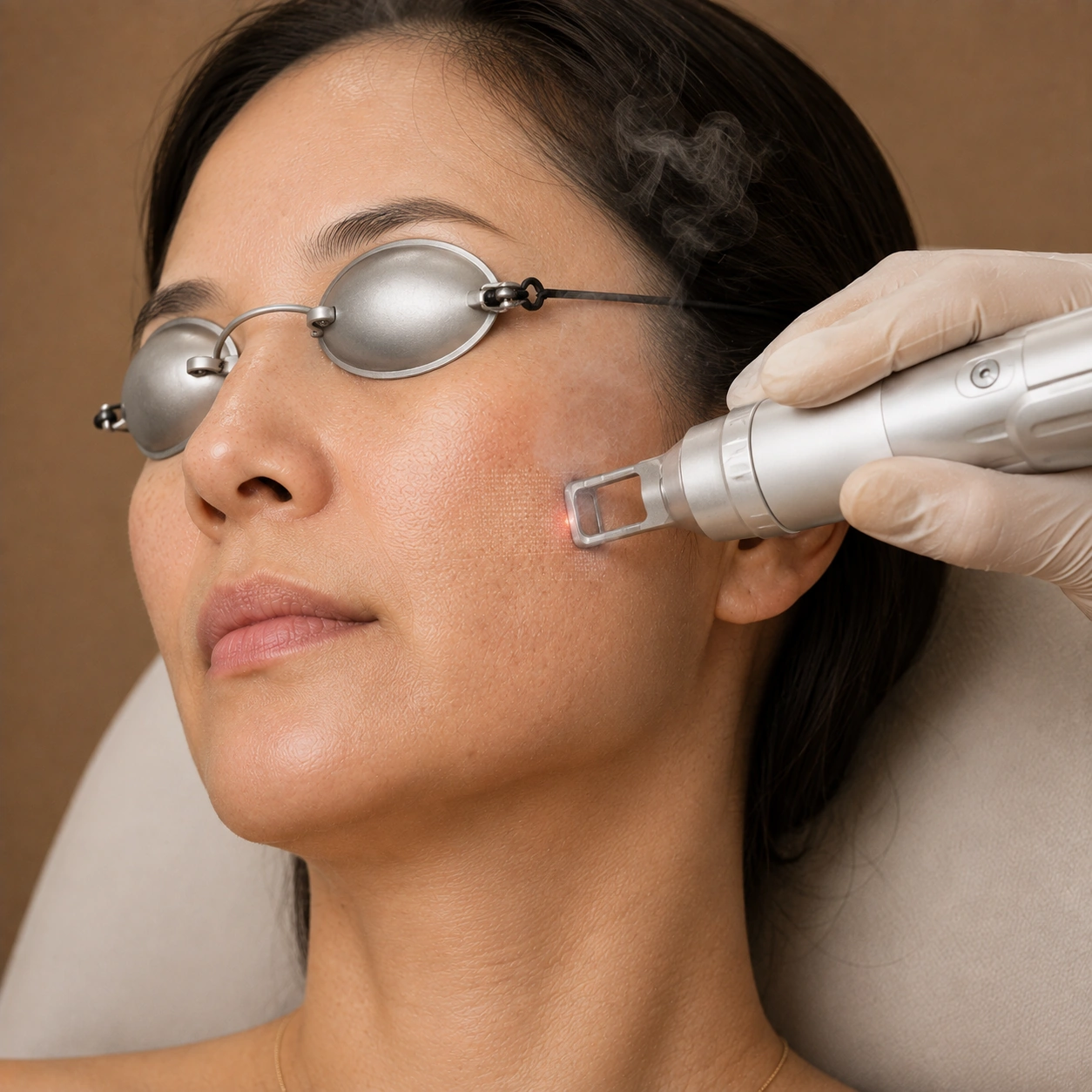
Sylfirm X delivers controlled radiofrequency energy into the dermis through fine, very short needles to tighten and remodel the eyelid skin from within.

See SkinPen microneedling
Laser resurfacing

Laser resurfacing

UltraClear and MultiFrax are used on the brow and lateral peri-orbital skin (rather than the eyelid itself) to refresh surface texture and stimulate collagen renewal.

Regenerative skin treatments

Regenerative skin treatments

Polynucleotides (Rejuran®), PDRN, multi-ingredient skinboosters (Profhilo, Sunekos, NCTF, klardie), and autologous PRP / platelet-derived exosomes support the underlying quality and resilience of the brow and upper-lid skin.

Structural support for the temple and lateral brow (selective)

Structural support for the temple and lateral brow (selective)

Where the upper-face scaffolding has descended, small amounts of carefully placed collagen biostimulators or HA filler in the temple or under the lateral brow can provide support that allows the brow to sit slightly higher.

When non-surgical treatment is not the right answer

When non-surgical treatment is not the right answer

For severe hooding — particularly where vision is affected — the most effective long-term answer is upper-lid blepharoplasty by an ophthalmology or oculoplastic specialist (often within the NHS where vision is affected). The clinic does not perform surgery.

We use a range of treatments depending on whether your hooding is mainly about brow position, mainly about eyelid skin, or a mix of both. Most patients with combined hooding benefit from a thoughtful sequence of treatments rather than any single one.

Chemical brow lift — prescription muscle-relaxing injections

  • Best for: Hooding driven by a descended brow, particularly at the tail
  • Downtime: Minimal — brief pinpoint redness
  • Lasts: Around 3–4 months

Where the hooding is partly or mainly driven by a descended brow, very small doses of prescription muscle-relaxing injections placed carefully into the muscles that pull the brow downwards (the corrugator supercilii, procerus, and the lateral fibres of the orbicularis oculi) allow the frontalis — the only muscle that lifts the brow — to do its job with less opposition. The brow rests slightly higher, lifting some of the skin off the upper lid. This is sometimes called a “chemical brow lift.” It is most effective for the tail (outer end) of the brow.

Prescription muscle-relaxing injections work by temporarily reducing the activity of specific muscles, so the skin above them stops folding with each movement. The active ingredient is botulinum toxin type A, a purified protein delivered in very small, precisely placed doses. These are prescription-only medicines in the UK, which means they can only be prescribed and administered by a qualified medical prescriber following a face-to-face consultation. Whether this treatment is suitable for you, and what specific product or dose would be used, is something Dr Garara will discuss with you at consultation. It is not suitable for everyone.

The use of botulinum toxin to lift the brow is what’s known as “off-licence” — established, lawful practice in qualified medical hands, but not specifically licensed by UK regulators for this particular indication. Dr Garara will explain this fully at consultation, including why he considers it appropriate for your case, and will obtain your informed consent before any treatment.

Dosing here is particularly conservative. Over-treating the brow depressors, or treating the wrong muscle for your pattern, can cause uneven brow position or — rarely — a paradoxical effect on the lateral brow. This is a question of careful technique.

Radiofrequency microneedling for upper-lid skin

  • Best for: Laxity and crepiness of the upper-lid skin itself
  • Downtime: 2–4 days of mild redness or swelling
  • Lasts: Long-lasting; collagen remodelling continues for months

For laxity, crepiness, and loss of elasticity in the upper-lid skin itself, radiofrequency microneedling with Sylfirm X delivers controlled radiofrequency energy into the dermis through fine, very short needles. The treatment is designed to encourage tightening and gradual collagen remodelling in the skin of the upper lid and brow area. This is distinct from laser; no light energy is involved. Sylfirm X has precise depth controls and is one of the energy-based options that can be used carefully in the peri-orbital region. Treatment is typically a short course of sessions with results developing over weeks to months.

Laser resurfacing

  • Best for: Sun-damaged or texturally changed brow and lateral eye-area skin
  • Downtime: 2–7 days depending on the device
  • Lasts: Long-lasting; results continue developing for months

Where the upper-lid skin has changed in surface texture — fine lines, sun damage, loss of smoothness — laser resurfacing can refresh the skin. UltraClear, a 2910nm fibre laser marketed as a “cold ablative” fractional system, is designed to stimulate collagen renewal with shorter recovery than traditional CO₂ lasers. MultiFrax, a dual-wavelength non-ablative fractional laser, is a gentler option used for fine lines and overall refinement. Which is appropriate depends on your skin type, the depth of the changes, and how much downtime you can accommodate. Laser is generally used on the brow and lateral peri-orbital skin rather than the eyelid itself.

Treatment for higher Fitzpatrick skin types (IV–VI) requires careful device selection and conservative settings to reduce the risk of post-inflammatory hyperpigmentation or, in some cases, keloid scarring. Dr Garara has particular experience in aesthetic medicine for skin of colour and tailors device choice, energy levels, and treatment intervals accordingly.

Regenerative skin treatments

To improve the underlying quality, hydration, and resilience of the thin skin of the brow and upper-lid area, regenerative options include polynucleotides (PN) such as Rejuran® — long-chain DNA fragments from wild salmon (Oncorhynchus keta) that are understood to act as a “repair signal,” supporting your fibroblasts to produce more collagen and elastin. A specific formulation suited to the delicate skin around the eye is sometimes used in this area. PDRN is a related compound with shorter chain length and a complementary clinical role. Multi-ingredient skinboosters such as Profhilo, Sunekos, NCTF, and klardie can be used very carefully in the broader eye-area skin to support hydration and the skin barrier.

Platelet-Rich Plasma (PRP) and platelet-derived exosomes are autologous options — both derived from the patient’s own platelets — that may be administered to support the quality of peri-orbital skin. PRP and platelet-derived exosomes are distinct treatments with different mechanisms; they are not the same as “advanced PRP.”

Structural support for the temple and lateral brow (selective)

  • Best for: Hooding aggravated by volume loss in the temple or under the lateral brow
  • Downtime: Mild swelling for 1–2 days
  • Lasts: Around 12–18 months for biostimulators; around 9–18 months for HA filler

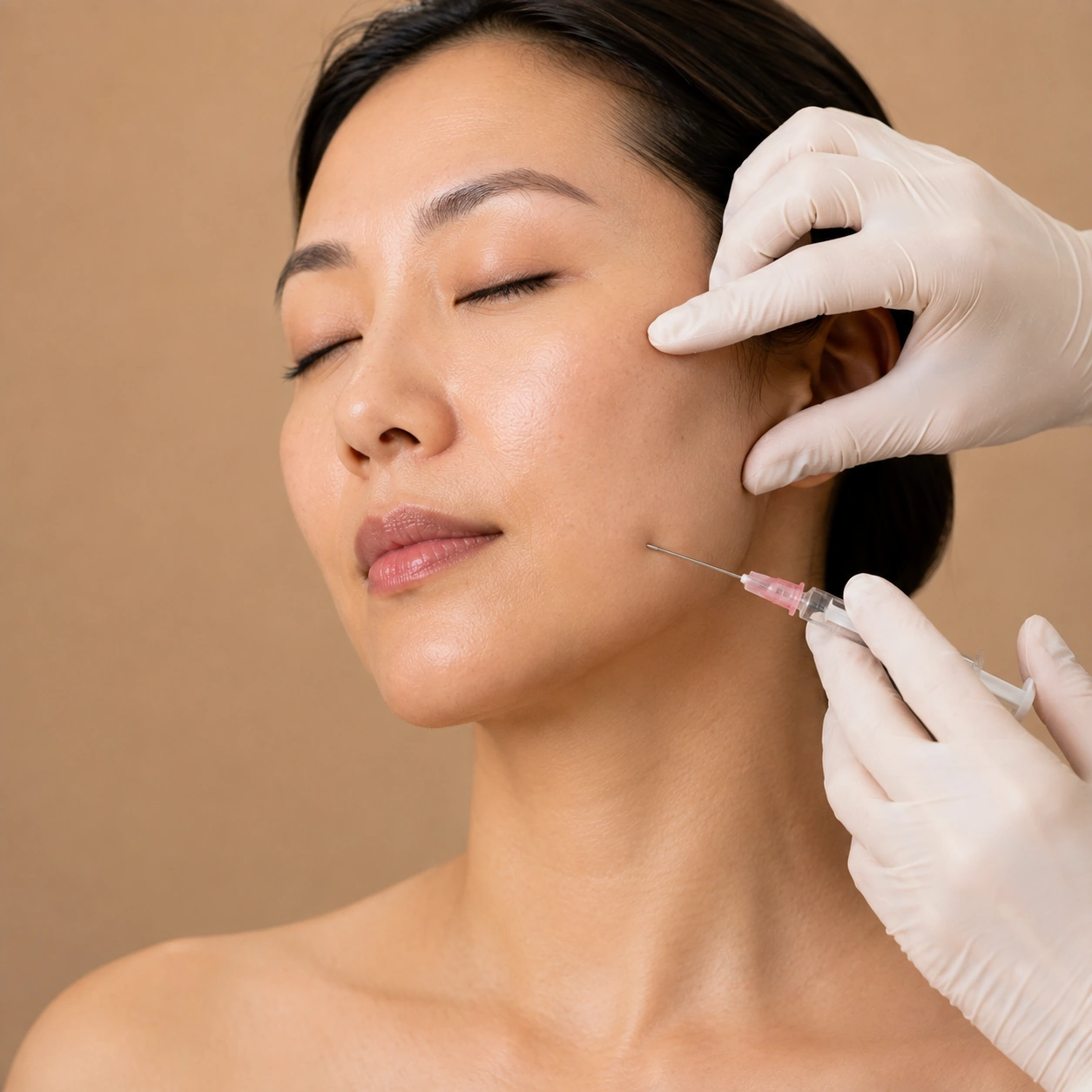
If the hooding is partly driven by a loss of volume in the temple or under the lateral end of the brow — so the entire upper-face scaffolding has descended — small amounts of carefully placed collagen biostimulators or hyaluronic acid filler in those areas can provide support that allows the brow to sit slightly higher. Poly-L-lactic acid (PLLA) biostimulators work primarily by signalling your fibroblasts to produce new collagen over a course of months; calcium hydroxyapatite (CaHA) preparations are an alternative class with both immediate and gradual effects. Specific product choice is determined at consultation. The temple is anatomically demanding and is treated very selectively — see the safety section.

Hyaluronic acid filler is reversible — it can be dissolved using an enzyme called hyaluronidase. If you are considering correcting or reversing previous filler, or want to understand more about how filler can be safely removed, see our page on filler removal and dissolving.

See our page on filler removal and dissolving.

When non-surgical treatment is not the right answer

For mild to moderate hooding, the non-surgical approaches above can give a meaningful, natural-looking improvement. For severe hooding — where the upper-lid skin physically rests on the lash line or affects how clearly you can see — the most effective and lasting answer is upper-lid blepharoplasty, a surgical procedure carried out by an ophthalmology or oculoplastic specialist (often within the NHS where vision is affected). The clinic does not perform surgery; if a surgical pathway is the right one for you, Dr Garara will say so at consultation and direct you to the appropriate specialist.

Considering treatment for hooded eyes?

Book a consultation with Dr Bhavin Garara to discuss whether a non-surgical approach is right for your specific anatomy.

Book a Consultation
Compare at a glance

Treatments at a Glance

Chemical brow lift (muscle-relaxing injections)

Best suited for
Hooding driven by a descended brow, particularly at the tail
Typical downtime
Minimal — brief pinpoint redness
How long results last
Around 3–4 months
What it does
Eases the muscles that pull the brow down, allowing the lifter to lift

Radiofrequency microneedling

Best suited for
Laxity and crepiness of the upper-lid skin itself
Typical downtime
2–4 days of mild redness or swelling
How long results last
Long-lasting; collagen remodelling continues for months
What it does
Tightens and remodels the eyelid skin from within

Laser resurfacing

Best suited for
Sun-damaged or texturally changed brow and lateral eye-area skin
Typical downtime
2–7 days depending on the device
How long results last
Long-lasting; results continue developing for months
What it does
Resurfaces and stimulates collagen renewal

Polynucleotides, PDRN, and skinboosters

Best suited for
Thin, dehydrated skin needing improved quality
Typical downtime
Small bumps for 24–48 hours
How long results last
Around 6–12 months with a course
What it does
Supports the skin’s own collagen production and repair

PRP and platelet-derived exosomes

Best suited for
Skin quality and tissue resilience
Typical downtime
1–3 days of mild swelling or redness
How long results last
Variable; benefits build over a course
What it does
Uses your own biology to support skin repair

Temple / lateral-brow biostimulator or filler (very selective)

Best suited for
Hooding aggravated by volume loss in the temple or under the lateral brow
Typical downtime
Mild swelling for 1–2 days
How long results last
Around 12–18 months for biostimulators; around 9–18 months for HA filler
What it does
Provides structural support so the upper-face scaffolding sits higher

Upper-lid blepharoplasty (not offered here)

Best suited for
Severe hooding or vision-affecting eyelid skin
Typical downtime
Surgical recovery — discuss with specialist
How long results last
Long-lasting
What it does
Surgical removal of excess upper-lid skin by an oculoplastic specialist

Downtime and duration figures are typical averages only. Individual results vary considerably depending on skin type, age, lifestyle, the specific product used, and how your body responds. Dr Garara will give you a more personalised picture at consultation.

Safety & risk

Is Hooded Eye Treatment Safe?

Non-surgical hooded-eye treatments are widely performed but the area is anatomically demanding. The peri-orbital region — particularly the temple, the brow, and the upper-lid skin — is supplied by branches of the ophthalmic artery, the main blood supply to the eye. Any injection here, particularly with dermal filler or biostimulator, carries a small but recognised risk of vascular complications, which in rare cases can include skin necrosis or, where the vascular network connects to the eye, loss of vision. The temple is among the anatomically higher-risk areas of the face.

We share this not to alarm you, but because patients deserve full information to make a confident decision. It is also the reason this area should only be treated by an experienced medical practitioner who understands the anatomy, uses safe technique, and is equipped to manage complications immediately if they arise — including the immediate availability of hyaluronidase to reverse hyaluronic acid filler. Dr Garara is always happy to discuss the specific risks of any treatment, and the safety protocols he follows, in detail at your consultation.

A more common, less serious consideration with the chemical brow lift is the risk of an uneven or paradoxical brow position if the dose is too high or placed in the wrong muscle for your pattern. This is a question of careful, pattern-led dosing.

Energy-based treatments (radiofrequency microneedling, laser) carry their own risks in the peri-orbital area — including transient swelling, redness, pigment change, and rarely scarring. These risks are reduced by experienced operator technique and appropriate device selection. Treatment around the eye specifically requires precise depth control and protective measures such as eye shields.

  • Qualified medical practitionerTreatment carried out by an experienced doctor with detailed anatomical training.
  • Reversal agents on handHyaluronidase and other complication-management tools are immediately available.
  • Full informed consentRisks, alternatives, and expected outcomes discussed in detail before any treatment.
Dr Bhavin Garara
Reviewed byDr Bhavin Garara

Frequently Asked Questions

Common questions about hooded eye treatment.

Read next

Related Concerns

Hooded eyes often appear alongside other signs of upper-face ageing. You may also want to read about:

← All eyes concerns

For an overview of all the facial concerns we treat, visit our Eyes treatments hub.

Next step

Ready to take the next step?

Book a consultation with Dr Bhavin Garara for a personalised assessment and treatment plan for your eyes.

Book a Consultation

Begin with a proper assessment.

Tell us a little about what you're looking for and we'll match you with the right consultation — at the clinic or virtually.

  • Your enquiry goes directly to Dr Bhavin's team.
  • We'll be in touch within one working day.
  • All consultations are strictly confidential.

This page is for general information and does not constitute medical advice. All treatments require a personal consultation. Suitability, risks, and expected outcomes will be discussed with you in detail before any treatment is carried out.