

Platelet Rich Plasma (PRP) and Exosomes
What is Platelet Rich Plasma?
Platelet-rich plasma, or PRP, uses your own blood. A small sample is spun in a centrifuge to concentrate the platelets, the cells that carry the growth factors your body uses to heal. That concentrate is then injected back into the scalp or skin, where those growth factors prompt repair, new blood vessels and collagen.
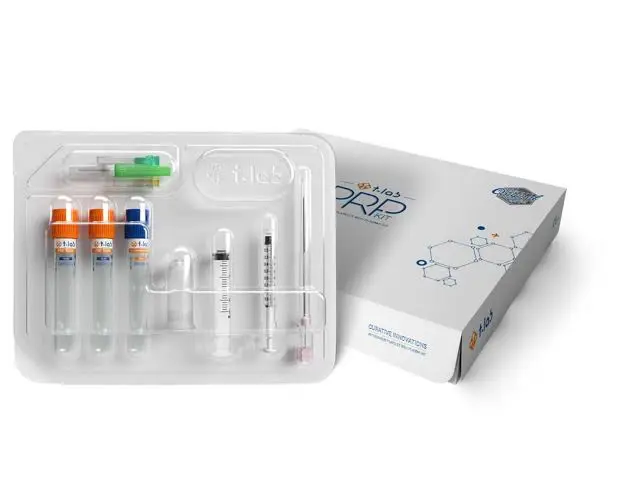
Dr Garara prepares PRP with the T-Lab system, which performs well on the independent DEPA scale that grades platelet dose and purity. The same platform can also produce platelet-derived exosomes, the tiny signalling packets released by platelets, as a regenerative add-on.
Because everything comes from your own body, there is no question of rejection or pigment risk, and it suits every skin tone. In the scalp it supports the hair follicles and prolongs the growth phase; in the skin it improves quality, firmness and under-eye texture.
At a glance
Treatment type
Autologous regenerative injection (from your own blood)
System used
T-Lab (Turkey), with Advanced PRX for platelet-derived exosomes
How it works
Concentrated platelets release growth factors that prompt repair
Best known for
Hair restoration, skin rejuvenation and under-eye quality
Quality marker
T-Lab ranks highly on the independent DEPA platelet classification
Also offered
Platelet-derived exosomes as a regenerative add-on
Typical course
Often around 3 sessions, then maintenance
Downtime
Usually mild; some redness or swelling for a day or two
Skin types
Autologous, so suitable for all skin tones
How it works
Concentrate the platelets: your blood is spun so the platelets are separated and concentrated well above their normal level in a small volume of plasma.
Release growth factors: once injected, the platelets release growth factors that signal cells to repair tissue, build collagen and form new small blood vessels.
Hair and skin: in the scalp this supports hair follicles and prolongs the growth phase; in the skin it improves quality, firmness and under-eye texture.
Platelet-derived exosomes: the T-Lab Advanced PRX process releases platelet-derived vesicles (exosomes) that carry signalling molecules, offered as a regenerative enhancement.
The benefits
Supports hair restoration for early genetic hair thinning, strengthening follicles and density.
Improves skin quality — growth factors support collagen for firmer, fresher-looking skin.
Helps the under-eye area's texture and tone.
Comes from your own body: autologous, so no foreign material and no pigment risk.
Suits every skin tone — nothing here is absorbed by melanin.
Pairs with microneedling and other regenerative options.
Concerns it treats
What to expect
Before
A short consultation and a routine blood draw, as you would have for any blood test.
During
The blood is spun in a centrifuge for a few minutes, then the PRP is injected into the scalp or skin. Numbing is used where needed.
Immediately after
Some redness, tenderness or mild swelling at the treated sites.
Downtime
Usually a day or two of mild redness or swelling.
Results
Hair and skin changes build gradually over months as the tissue responds.
Course
Commonly around three sessions to begin, then maintenance sessions to hold the result.
What the evidence shows
Hair restoration
- A meta-analysis of nine randomised trials in 238 patients found PRP increased hair density at three and six months compared with placebo, with significant results (Zhang et al., J Cutan Med Surg, 2023).
- A larger systematic review of 27 controlled trials reported that PRP increased hair density versus saline (mean 25.6 hairs/cm) with no serious adverse events, while noting the overall quality of evidence is still limited (Cruciani et al., Blood Transfus, 2021).
The T-Lab system and its DEPA results
- DEPA is an independent way of grading PRP quality, covering the Dose of injected platelets, the Efficiency of production, the Purity of the PRP and its Activation. The top 'AAA' grade means a high-concentration injection of more than five billion platelets with minimal red-blood-cell contamination (Magalon et al., BMJ Open Sport Exerc Med, 2016).
- In a comparative DEPA analysis at the IMCAS congress, T-Lab reports its kit delivered the highest platelet recovery rate, dose and purity versus main competitors. These are manufacturer-reported results, not independent trial outcomes, and individual preparations vary.
Individual results vary and depend on assessment at consultation. Manufacturer figures are attributed as such.
Key facts
- PRP is an autologous treatment made by concentrating the platelets from your own blood.
- Dr Garara uses the T-Lab system, which ranks highly on the independent DEPA platelet classification.
- It is used mainly for hair restoration, skin rejuvenation and under-eye quality.
- Meta-analyses show PRP increases hair density versus placebo; evidence is strongest for hair.
- It is autologous with no pigment risk, so it suits every skin tone.
References & sources
- Zhang X, et al. Platelet-Rich Plasma for Androgenetic Alopecia: A Systematic Review and Meta-Analysis of RCTs. J Cutan Med Surg. 2023;27(5):504-508.
- Cruciani M, et al. Platelet-rich plasma for the treatment of alopecia: a systematic review and meta-analysis. Blood Transfus. 2021;21(1):24-36.
- Magalon J, et al. DEPA classification: a proposal for standardising PRP use. BMJ Open Sport Exerc Med. 2016;2(1):e000060.

Your skin has a story. Learn to read it.
UHai analyses your skin across multiple dimensions — tone, texture, pigmentation, hydration and more — and generates a personalised clinical report in minutes. No appointment needed.
- A clinical skin report, personalised to you
- Analyses tone, texture and pigmentation
- Free to use, no appointment needed
Explore FAQs on Platelet Rich Plasma
Find answers to common questions about Platelet Rich Plasma.
Your own blood. A sample is spun to concentrate the platelets and their growth factors, which are then injected back into the scalp or skin to prompt repair.
The strongest evidence is for hair. Meta-analyses show PRP increases hair density compared with placebo, though it works best for early thinning and as part of a maintained plan.
They are tiny signalling packets released by platelets. The T-Lab system can produce them as a regenerative add-on; it is an emerging area.
Yes. PRP is autologous and nothing in it is absorbed by melanin, so there is no pigment risk and it suits every skin type.
Often around three to start, spaced a few weeks apart, followed by maintenance sessions to keep the result.
Usually a day or two of mild redness, tenderness or swelling at the injection sites.
Begin with a proper assessment.
Tell us a little about what you're looking for and we'll match you with the right consultation — at the clinic or virtually.