

Seffihair Stem Cell Scalp Therapy
What is Seffihair?
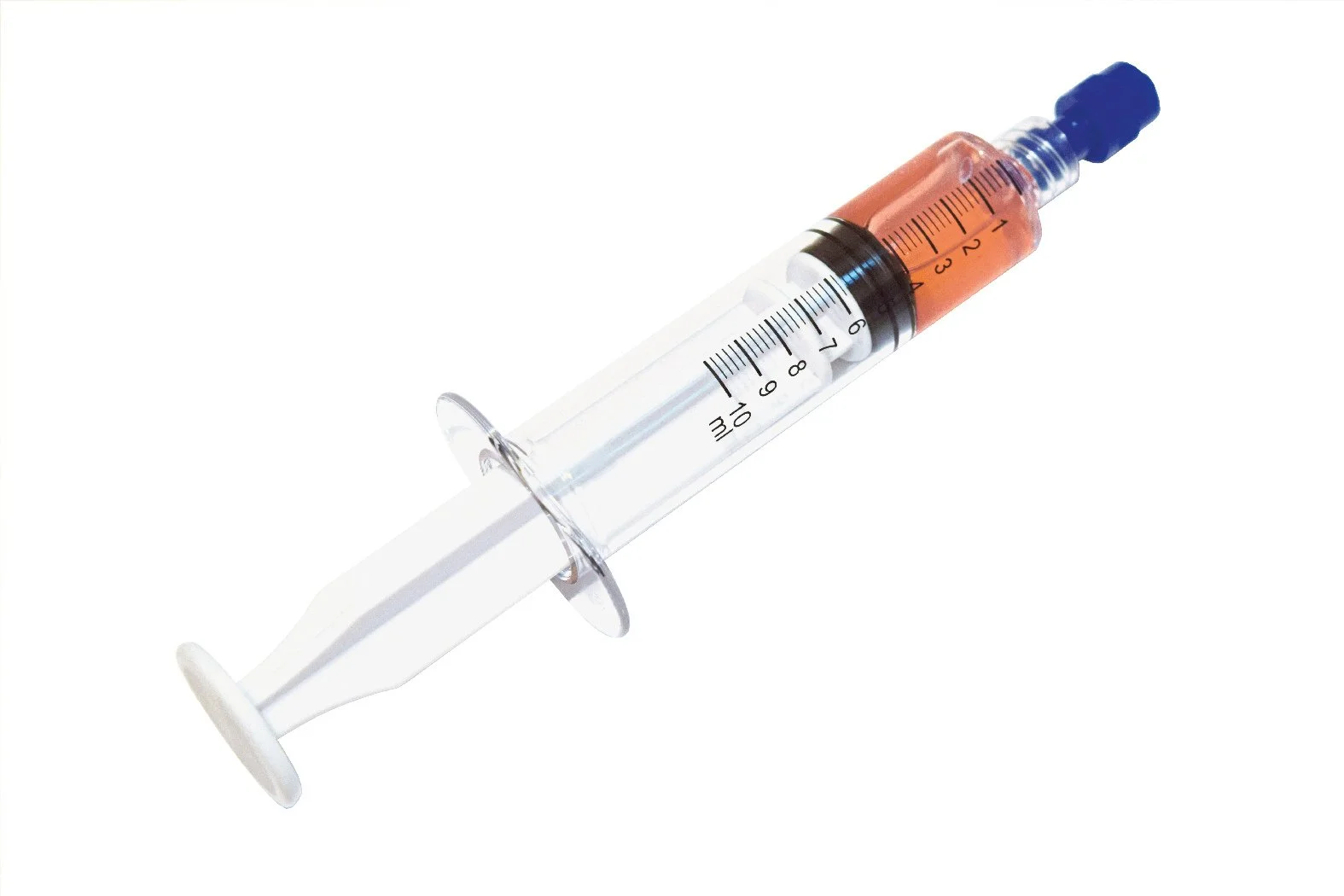
Seffihair takes a different route to hair restoration. A small amount of your own fat is harvested and processed to release its stromal vascular fraction, or SVF, a mix of cells that includes adipose-derived stem cells. That cell-rich preparation is injected into the scalp, where it supports the environment around the hair follicles through growth-factor signalling.
It is not a hair transplant and it is not a polynucleotide treatment; it is a regenerative therapy aimed at the early stages of genetic hair thinning, in both men and women. Seffihair is made by Seffiline in Italy.
Because the cells come from your own body, it suits every skin tone. Injected into the scalp, these cells work mainly through paracrine signalling, releasing growth factors that support the environment around weakening follicles rather than replacing them directly.
At a glance
Treatment type
Autologous adipose-derived stem cell scalp therapy
System used
Seffihair by Seffiline (Italy)
What it delivers
Stromal vascular fraction (SVF) from your own fat
How it works
Fat-derived cells support the follicle environment via growth signals
Best known for
Early genetic hair thinning, in men and women
Not
Not a polynucleotide and not a hair transplant
Typical course
Often a single procedure, assessed over months
Downtime
Some scalp and donor-site soreness for a few days
Skin types
Autologous, so suitable for all skin tones
How it works
Harvest and process: a small volume of fat is collected and processed with the Seffihair kit to concentrate the stromal vascular fraction, which is rich in adipose-derived stem cells.
Support the follicle niche: injected into the scalp, these cells work mainly through paracrine signalling, releasing growth factors that support the environment around the follicles.
Aimed at early thinning: best suited to early genetic hair loss, where follicles are weakening but still present, rather than long-established baldness.
Distinct from other options: it is not a polynucleotide and not a transplant; it is a cell-based regenerative therapy.
The benefits
Supports thinning hair — aimed at early genetic thinning in men and women.
Uses your own cells: autologous SVF, so no foreign material and no pigment risk.
Works through the follicle environment via growth-factor signalling.
A single, in-clinic procedure, usually carried out in one session and assessed over the months that follow.
Complements other hair approaches and can sit alongside PRP and medical therapies.
Safe across skin tones: autologous and free of any melanin-targeting step.
Concerns it treats
What to expect
Before
Consultation and assessment of the pattern and stage of thinning. A small donor area is identified.
During
Fat is harvested under local anaesthetic, processed to the SVF, and injected across the scalp. The procedure takes a couple of hours.
Immediately after
Scalp tenderness and some soreness or bruising at the donor site.
Downtime
A few days of mild soreness.
Results
Any change builds gradually over months and is assessed with photographs.
Course
Usually a single procedure, reviewed over time and sometimes combined with other hair treatments.
What the evidence shows
Adipose stem cells for hair
- In a first-of-its-kind patient series, scalp injection of SVF-enriched adipose tissue in early genetic hair loss was safe and well tolerated, with quantitative and photographic improvement reported (Perez-Meza et al., Stem Cells Cloning, 2017).
The wider picture
- A review of regenerative strategies for hair growth places adipose-derived cells, their secreted growth factors and PRP among the promising approaches under active study, while noting the evidence base is still developing (Shimizu et al., Regen Ther, 2022).
Individual results vary and depend on assessment at consultation. Manufacturer figures are attributed as such.
Key facts
- Seffihair injects your own adipose-derived stem cells (stromal vascular fraction) into the scalp.
- It is aimed at early genetic hair thinning in men and women, not established baldness.
- It is not a hair transplant and not a polynucleotide treatment; it is a cell-based regenerative therapy by Seffiline.
- An early patient series reported it was safe with measurable and photographic improvement.
- It uses your own cells, so it suits every skin tone.
References & sources
- Perez-Meza D, et al. Hair follicle growth by stromal vascular fraction-enhanced adipose transplantation in baldness. Stem Cells Cloning. 2017;10:1-10.
- Shimizu Y, et al. Regenerative medicine strategies for hair growth and regeneration: A narrative review. Regen Ther. 2022;21:527-539.
- Seffiline S.r.l. (Italy): Seffihair device information, seffiline.it.

Your skin has a story. Learn to read it.
UHai analyses your skin across multiple dimensions — tone, texture, pigmentation, hydration and more — and generates a personalised clinical report in minutes. No appointment needed.
- A clinical skin report, personalised to you
- Analyses tone, texture and pigmentation
- Free to use, no appointment needed
Explore FAQs on Seffihair
Find answers to common questions about Seffihair.
It is a regenerative scalp treatment that uses the stromal vascular fraction, including adipose-derived stem cells, from your own fat to support the hair follicle environment in early thinning.
No. It does not move or implant follicles. It delivers your own regenerative cells to support the existing follicles, and it is best for early thinning rather than established baldness.
No. It is a cell-based therapy using fat-derived SVF, distinct from polynucleotides and from PRP, though it can sit alongside them in a plan.
Yes. The cells are your own and no step targets melanin, so it suits every skin type.
Any change builds gradually over months and is best judged with before-and-after photographs rather than week to week.
Usually a few days of scalp tenderness and some soreness or bruising where the fat was taken.
Begin with a proper assessment.
Tell us a little about what you're looking for and we'll match you with the right consultation — at the clinic or virtually.