

UltraClear Cold-Ablative Laser Resurfacing
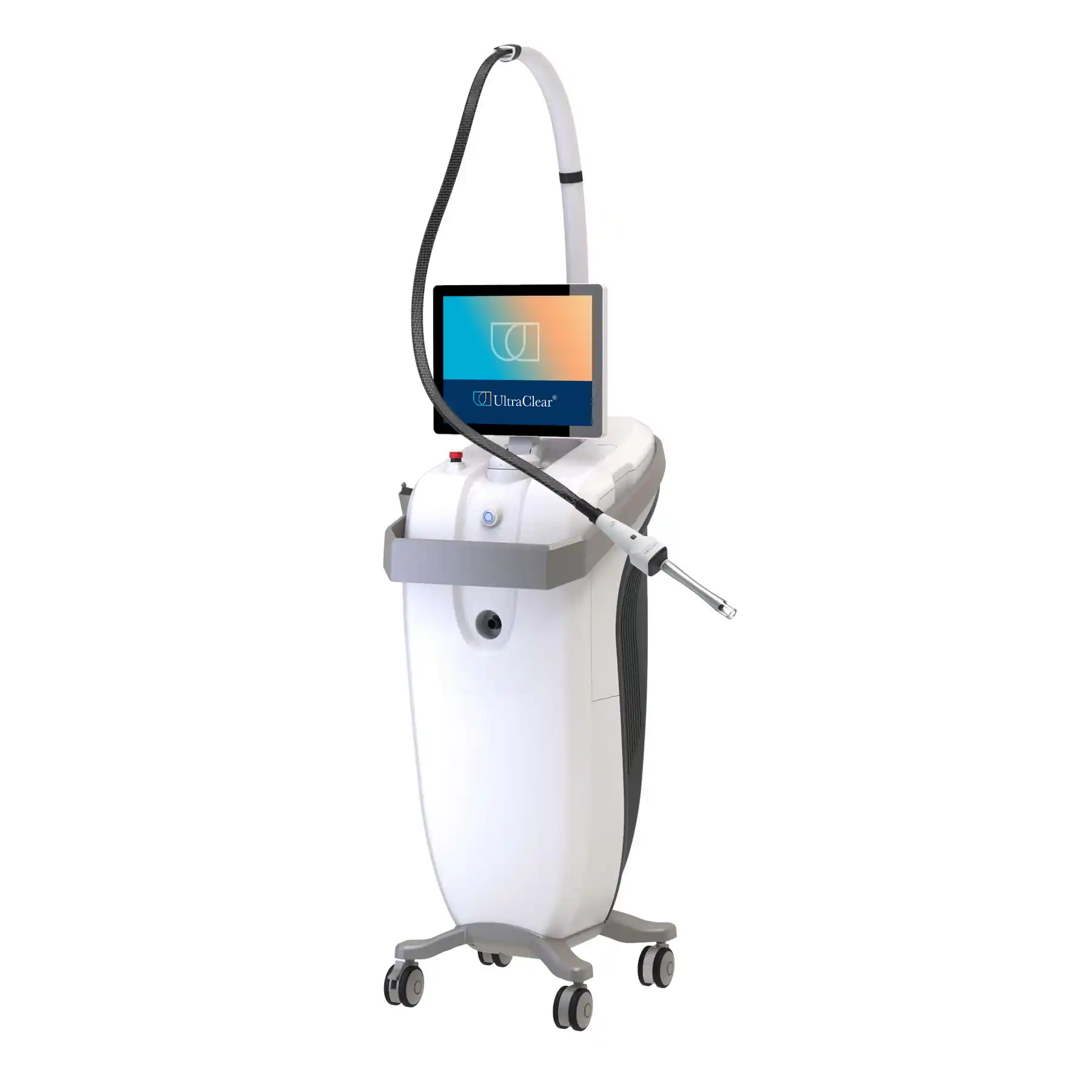
What is UltraClear Laser?
UltraClear is a 2910 nm erbium fibre laser from Acclaro Medical, and it was the first of its kind. It is described as a cold-ablative laser because it removes microscopic columns of skin while keeping the surrounding heat low. The result is resurfacing closer to what an ablative laser achieves, but with less downtime and discomfort than the older generation of devices.
The platform has several modes, from a superficial setting that mostly refreshes texture to a deeper drilling mode that reaches the mid-dermis for scars and lines. Each laser pulse is split into rapid sub-pulses, which is how it ablates precisely while limiting heat spread.
The 2910 nm wavelength is strongly absorbed by water, so it can vaporise tiny channels of skin. Narrow ablative channels close and heal quickly, which contributes to less pain, less bleeding and faster recovery — Dr Garara uses it for a real step up in skin quality without committing to a long recovery.
At a glance
Device type
Fractional ablative 2910 nm erbium fibre laser (cold ablative)
Manufacturer
Acclaro Medical, USA
What 'cold' means
Tissue is ablated with low surrounding heat, so healing is faster and more comfortable
Signature tech
3DIntelliPulse, with Clear, Silk, Ultra and combined modes; Laser Coring
Best known for
Resurfacing: texture, fine lines, acne scars and pigmentation
Anaesthetic
Often none for lighter modes; topical for deeper work
Typical course
From a single treatment; a short series for scarring
Downtime
Commonly mild to moderate for up to about 5 days
Skin types
Used across all skin types with appropriate settings
How it works
3DIntelliPulse: each pulse is broken into four rapid sub-pulses with brief coagulative energy in between, delivered at speeds up to several thousand pulses per second — ablating cleanly while keeping collateral heat low.
Treatment modes: Clear is the most superficial; Silk (Clear+) reaches the epidermis for rhytides and acne scars; Ultra drills into the mid-dermis for deeper scars and lines; the combined UltraClear mode blends immediate and longer-term effects.
Laser Coring removes narrow cores of tissue for scar revision and structural remodelling, going deeper than standard resurfacing.
Small channel diameter: narrow ablative channels close and heal quickly, for less pain, less bleeding and faster recovery.
The benefits
Ablative-level results with less recovery than traditional ablative lasers.
Often no injectable anaesthetic — lighter modes are comfortable enough that numbing is frequently unnecessary.
Tackles several concerns at once: texture, fine lines, acne scars and pigment by choosing the mode.
Works beyond the face — suitable for the neck, chest and arms.
Adjustable depth from a surface refresh to mid-dermal remodelling.
Designed for all skin types, with a low-heat profile intended to widen who can be treated safely.
Concerns it treats
What to expect
Before
Consultation and assessment. Numbing cream for deeper modes; lighter modes often need none.
During
The laser passes over the area creating microscopic channels. Expect heat and a prickling sensation. Treatment time depends on the area and mode.
Immediately after
Redness, warmth and mild swelling, a little like sunburn.
Downtime
Commonly mild to moderate for up to around five days, longer for the deepest modes.
Results
Skin looks fresher as it heals, with texture, tone and scarring improving over the following weeks as collagen rebuilds.
Course
Some concerns respond to a single treatment; scarring usually needs a short series.
What the evidence shows
Photodamaged skin
- A pilot study of the 2910 nm fractional ablative erbium laser on photodamaged skin reported improvement on the Global Aesthetic Improvement Scale, with mild to moderate responses lasting up to five days and no scarring or dyspigmentation (Selim et al., Lasers in Surgery and Medicine, 2023; 55:715-723).
Acne scarring
- A study using the laser's drilling mode found the 2910 nm erbium fibre laser safe and effective for improving the appearance of acne scars (Bernstein et al., Lasers in Surgery and Medicine, 2024; PubMed 39308036).
A note on skin of colour
- The case for UltraClear in richer skin tones rests on its cold-ablative design: keeping surrounding heat low and using narrow channels that heal quickly aims to limit the thermal injury that drives post-inflammatory hyperpigmentation. As with any resurfacing laser, settings are kept conservative in Fitzpatrick IV to VI, a test response is wise, and diligent sun protection afterwards is part of the plan.
Individual results vary and depend on assessment at consultation. Manufacturer figures are attributed as such.
Key facts
- UltraClear is a 2910 nm erbium fibre laser by Acclaro Medical, the first cold-ablative laser of its kind.
- It resurfaces skin with ablative-level results but less downtime than traditional ablative lasers.
- Modes range from superficial (Clear) to mid-dermal drilling (Ultra), plus Laser Coring for scar revision.
- Published studies support its use for photodamaged skin and acne scarring, with no dyspigmentation reported in a pilot study.
- It is used across all skin types, with downtime commonly up to around five days.
References & sources
- Selim MM, et al. Clinical Evaluation of a New Fractional Ablative 2910 nm Erbium Laser on Photodamaged Skin: A Pilot Study. Lasers in Surgery and Medicine. 2023;55:715-723.
- Bernstein EF, et al. The 2910-nm Fiber Laser Is Safe and Effective for Improving Acne Scarring. Lasers in Surgery and Medicine. 2024. PubMed 39308036.
- Acclaro Medical: UltraClear 2910 nm cold-ablative fibre laser, device information, acclaromedical.com.

Your skin has a story. Learn to read it.
UHai analyses your skin across multiple dimensions — tone, texture, pigmentation, hydration and more — and generates a personalised clinical report in minutes. No appointment needed.
- A clinical skin report, personalised to you
- Analyses tone, texture and pigmentation
- Free to use, no appointment needed
Explore FAQs on UltraClear Laser
Find answers to common questions about UltraClear Laser.
It ablates tiny columns of skin while keeping the surrounding heat low, using rapid sub-pulses. That lower collateral heat is why recovery tends to be faster and more comfortable than older ablative lasers.
Texture, fine lines and wrinkles, acne scars, sun damage and pigmentation. Different modes reach different depths, from a surface refresh to mid-dermal remodelling.
Yes. A 2024 study using its drilling mode found the 2910 nm fibre laser safe and effective for improving acne scarring.
It is designed for use across all skin types, and the low-heat profile aims to reduce the risk of post-inflammatory pigmentation. Conservative settings, a test response and good sun protection are still important in Fitzpatrick IV to VI.
Often mild to moderate redness and swelling for up to about five days, with deeper modes needing a little longer.
Lighter modes are frequently done without injectable anaesthetic; deeper treatments use topical numbing.
Some concerns improve after a single session. Scarring and deeper texture usually respond best to a short course.
Begin with a proper assessment.
Tell us a little about what you're looking for and we'll match you with the right consultation — at the clinic or virtually.